
Corporate Coaching Courses in Singapore: The Complete Guide
Interested in professional coach training—or looking for coaching and leadership development for your organisation? Speak with us and we’ll connect you with the right person.


Corporate Coaching Courses at a Glance
- What they are: In search results, “corporate coaching courses” can mean either professional coach training for people who want to coach in organisational settings, or coaching and leadership-development programmes purchased by an organisation for its people. This guide primarily serves individuals comparing professional coach training—including leaders, HR and L&D professionals, career changers and practising coaches. If you want to train as a professional coach or build coaching capability in your own leadership role, explore The Coach Partnership (TCP). If you are buying coaching or leadership development for an organisation, explore The Works Partnership (TWP) or contact us to discuss the outcome you need.
- The education pathway: ICF Level 1 provides coach education aligned with the ACC pathway, Level 2 with the PCC pathway, and Level 3 advanced education for PCC credential-holders pursuing MCC. Completing a programme is not the same as receiving an ICF credential; application and experience requirements also apply.
- Legal position: Coaching is unregulated in Singapore. Nobody needs a certificate to call themselves a coach. Corporate procurement teams screen for one anyway.
Search for corporate coaching courses in Singapore and the quotes run from SGD 4,000 to well past SGD 30,000. Every one of those pages says “accredited”, and the word means something different on each. Some mean ICF, some the European Mentoring and Coaching Council, some a university’s own certificate. Pick wrong and you pay a second full tuition later to cover the same ground.
All of that is checkable before you pay a deposit. ICF publishes exact education, mentor coaching and client-experience requirements for every credential it awards. This guide measures coach-training programmes against those requirements so you can compare what is included before you enrol.

First, the three levels
Almost every number in this guide hangs off one of three ICF accreditation levels, so it is worth getting them straight first.
- Level 1 delivers at least 60 hours of coach-specific education and supports the ACC application pathway. It is the entry route; completing the programme does not itself confer the credential.
- Level 2 delivers at least 125 hours of coach-specific education and supports the PCC application pathway. It offers greater depth for people who intend to practise professionally or use coaching extensively in leadership and organisational settings.
- Level 3 is advanced coach education for practitioners who already hold a PCC and are pursuing the MCC pathway.
From here on, this guide says Level 1 program or Level 2 program rather than repeating the hour counts, and the full comparison sits in the table further down. One distinction saves a lot of confusion later: the hours a program teaches and the hours a credential requires are two separate counts.

What is Corporate Coaching?
Corporate coaching is professional coaching delivered in an organisational context. In an individual engagement, the person being coached is the client or coachee, while the organisation may sponsor the work. That three-way relationship shapes contracting, goals and progress reporting, while the substance of coaching conversations remains confidential.
The work itself is a series of conversations rather than advice-giving or classroom instruction. A coach asks questions, reflects what they notice and helps the client test different perspectives. This matters to someone considering coach training: a credible course should develop the ability to facilitate insight and action, not simply supply management techniques.
That is easier to see worked through than described.
Take someone who rarely speaks in senior meetings, even when they have something useful to say.
A junior or transactional coach might help them prepare two points in advance, practise saying them clearly and commit to speaking once in the next meeting. That may help. But it still deals mainly with the behaviour: how do I speak up more?
An ontological coach goes underneath that. Who are you being when you enter the room? What do senior people represent to you? What are you afraid might happen if you speak and get it wrong? What happens in your body just before you decide to stay quiet? Where else does the same pattern show up?
The action may still be, “Speak once in the next meeting.” The difference is that the action comes after examining the beliefs, emotions and physical responses that make silence seem sensible.
One approach works mainly on the behaviour: How do I speak up more?
Ontological coaching works with the observer producing the behaviour: Who am I being, and what world am I seeing, that makes staying quiet make sense?

How Corporate Coaching Relates to Executive, Leadership, Performance, Group and Team Coaching
These labels overlap, but they describe different contexts, clients or areas of focus rather than a fixed hierarchy. Corporate or organisational coaching is a broad description for coaching commissioned within an organisation.
Executive coaching works with senior executives and may address enterprise leadership, transitions, succession, stakeholder dynamics and strategic complexity.
Leadership coaching develops how a person leads, whether they are moving into their first people-management role or carrying senior organisational responsibility.
Performance coaching focuses on a defined goal, role transition, project or improvement area. It may be relevant at any level; it describes the focus of the engagement, not a lower credential level.
Individual coaching works with one person. Group coaching brings several individuals together around a common theme, although they do not necessarily share responsibility for one collective result. Team coaching works with an intact team as the client, focusing on its shared purpose, relationships and collective performance. Organisational or systemic coaching may work across multiple levels, teams and stakeholder relationships.
Core professional coach education develops capabilities used in individual coaching across different organisational contexts. Team coaching requires additional competencies because the team—not one individual—is the client, so it should not be presented as automatically covered by a general individual-coach training programme.

What Does a Corporate Coach Do?
A coach working in an organisation may support an individual leader, a group of individuals or an intact team, depending on their training and the contract. In an individual engagement, the coach typically works through a sequence of confidential conversations toward outcomes agreed with the coachee and organisational sponsor. For someone comparing coach-training courses, the work commonly includes:
- Contracting: Agreeing the goal, the number of sessions, what gets reported back to the sponsor and what stays private. Coaches who skip this spend the rest of the engagement negotiating it.
- Assessment work: Gathering data before the coaching itself starts. A 360 means interviewing the people around the leader, usually their manager, peers and direct reports, then summarizing what they say into themes. Psychometrics and stakeholder conversations do the same job from other angles. The coach feeds all of it back in a way the leader can act on.

- The coaching sessions: Typically 60 to 90 minutes on a regular rhythm. ICF counts one coaching experience hour as a full 60-minute session with someone who hired you specifically as their coach.
- Team coaching: Working with an intact team as the client, where the focus is its shared purpose, relationships and collective results. This requires team-coaching capability beyond general individual-coach education.
Coaches in independent practice also need to build relationships, explain their offer and contract work ethically. Internal coaches operate differently because coaching is part of their organisational role, but they still need clear referral, sponsorship and confidentiality processes.
Benefits of Corporate Coaching Courses
The clearest benefit of a corporate coaching course is that it converts an instinct for developing people into a method you can repeat under pressure, with a credential corporate buyers recognize, whether you go on to sell coaching or lead a team. Most people arrive already good with people. What they lack is a way to stay useful when a conversation gets difficult.
Depth in Your Own Role
The benefit leaders report back on is not the credential. It is that they stop arriving at a conversation with the answer already written. Training slows the gap between what someone says and what you do about it, and inside that gap a manager gets to choose rather than react. It shows up in appraisals that stop being scripts, and in how quickly a team will tell you something you would rather not hear. None of that requires you to leave your job or take a single paying client.
Professional Credibility
An ICF credential is the closest thing coaching has to a common standard, and buyers who cannot evaluate quality before they purchase use it as a proxy. Most large organizations keep a shortlist of pre-approved coaches, called a coaching panel, and HR or procurement controls who gets on it. Many set an ACC or PCC credential as the entry requirement for that list. Without one, your proposal is filtered out before anyone reads what you can actually do.
Path to Advancement
ICF-accredited education can support a staged credential pathway. Level 1 covers the education requirement used in the ACC pathway; Level 2 covers the education requirement used in the PCC pathway; and PCC credential-holders may progress to Level 3 education as part of pursuing MCC. Each credential also has separate experience, mentor coaching, performance evaluation and examination requirements. Starting with Level 2 may avoid repeating education hours later if PCC is already your intended destination.
Quality Assurance
ICF accreditation checks the provider as well as you. Accreditation is granted against published requirements covering contact hours, mentor coaching, observed sessions and a final performance evaluation, all set out in the comparison table below. Because those requirements are published, you can hold a provider to them.
Comprehensive Support
An accredited program bundles in support you would otherwise have to buy for yourself after you graduate, at a higher price. The clearest case is mentor coaching, where an experienced coach observes you work and gives feedback against the ICF Core Competencies. Every credential requires it, and it runs to 10 hours, and ICF caps the group format at seven of those, with no more than 10 participants, so three hours have to be one-to-one.
Ethical Standards
Coaching reaches into the same territory as therapy, and the boundary matters. An accredited program trains you on the ICF Code of Ethics, on confidentiality inside a three-way corporate contract, and on recognizing when a client needs a clinician. A coach who misses that boundary can do real harm, and the sponsoring organization carries it too.
Interested in professional coach training—or looking for coaching and leadership development for your organisation? Speak with us and we’ll connect you with the right person.
Who Should Take a Corporate Coaching Course?
Corporate coaching courses suit four groups, and the right program differs for each.
- Career changers building a practice. Senior operators leaving corporate life with a long leadership record need a Level 2 program. Corporate buyers ask about credentials, and the extra hours are also where the coaching becomes reliable enough to charge for.
- Managers and leaders staying in role. Two routes work here, and the shorter one is not automatically the right one. A two to five day internal coach training program will change how you run one-to-ones. A full Level 1 or Level 2 certification changes something larger, which is what you notice in a conversation before you decide how to respond. Plenty of people take one with no intention of ever coaching commercially. They do it because a coaching approach tends to survive contact with a real deadline and a real disagreement only if someone has watched them use it and told them where it broke down. For this group the credential is a by-product rather than the point.
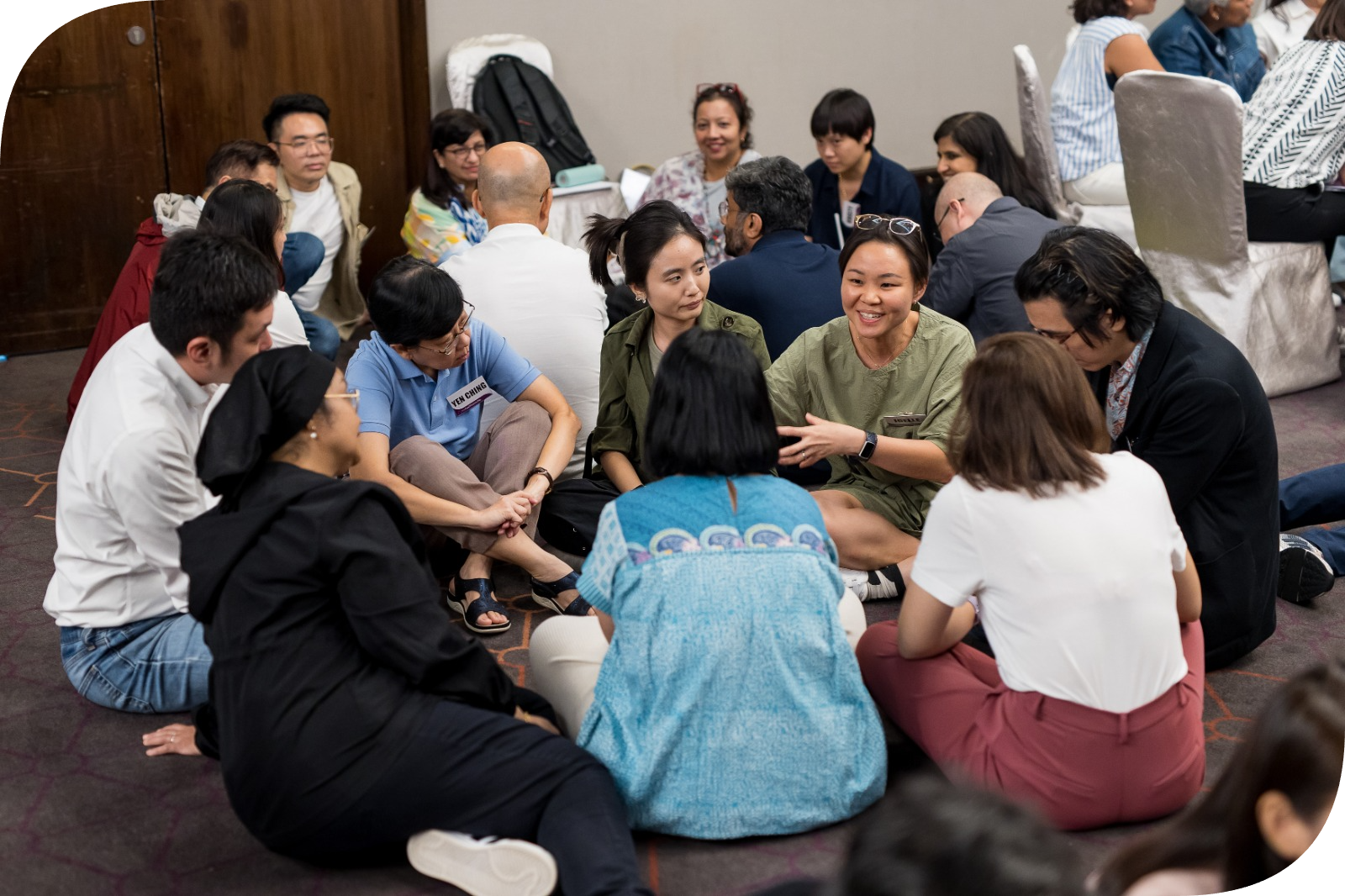
- HR, talent and learning professionals. This group often builds internal coaching capability across a company, so they need enough depth to assess external coaches and design a coaching culture. Level 1 or Level 2 both work, and the choice turns on how far they want to go themselves. Level 2 gives an internal team enough depth to build and sustain that culture rather than only to buy it in.
- Credentialed coaches specializing. If you already hold an ACC or PCC and want to move into team coaching or supervision, your route is Continuing Coach Education or an advanced team coaching program.
If you are unsure which of these you are, ask two things. Who will pay for your coaching in three years, and how much of your working week you want this to change. The first points to the credential you need. The second points to the depth, and it is the one people underweight.
Do You Need a Certification to Be a Corporate Coach?
No. Coaching is not a licensed profession in Singapore, and there is no legal barrier to setting up as a corporate coach tomorrow. Certification is a market requirement, so be clear about what it buys.
It buys access. Large organizations purchasing coaching are managing a risk they cannot inspect directly, so they lean on credentials, and an ICF credential gets your name onto the approved panel. It also buys the mentor coaching and observed practice that most self-taught coaches never get, which is where the skill actually forms.
It does not buy clients. Plenty of certified coaches struggle to fill a practice, and some of the highest earners built their books on a reputation earned in industry before they trained at all. If you already have a senior network that trusts you, certification accelerates something you have. If you do not, certification alone will not create it.
The honest position: if you plan to coach independently for corporate clients, certify at PCC level, because the market will ask. If you are a leader or manager staying in role, the question is not commercial at all, it is how deeply you want to change the way you lead. A short program will sharpen your one-to-ones. A full certification changes how you listen, and for a leader staying in role that is usually the part that matters, credential or no credential.

Types of Corporate Coaching Courses
ICF accredits coach training at three levels, plus continuing education and a separate track for team coaching. Every ICF-accredited curriculum is built on the same spine, the ICF Core Competencies, which sit in four domains: foundation, co-creating the relationship, communicating effectively, and cultivating learning and growth. What changes between the levels is depth, hours and how rigorously your own coaching is observed. What ICF does not standardize is the method. Accreditation certifies that a program meets the requirements, not what it teaches you to do in the room, so two Level 2 programs with identical hour counts can train you in quite different traditions. That choice is yours to make, and it shapes a career more than a difference of a few contact hours will.
| Program Type | Credential | Training Hours and Typical Duration | Mentor Coaching / Supervision | Coaching Experience Required | Who It Suits |
|---|---|---|---|---|---|
| ICF Level 1 | ACC | 60+ (ICF publishes a 60-hour minimum). Typically 3 to 6 months | 10 hours over at least 3 months | 100 hours, 8 clients, 75 paid | New coaches, and managers wanting a first accredited grounding |
| ICF Level 2 | PCC | 125 to 175. Typically 9 to 12 months | 10 hours over at least 3 months, plus 6 observed sessions | 500 hours, 25 clients, 450 paid | Coaches building a corporate or executive practice, and leaders, HR and learning professionals wanting the same depth in their own role |
| ICF Level 3 | MCC | 75+ advanced, within the 200+ the MCC requires. Duration varies by provider | 10 hours | 2,500 hours, 35 clients, 2,250 paid | Senior coaches, mentor coaches and trainers |
| Continuing Coach Education | Renewal only | Varies by course, from a few hours to several days | Not applicable | Not applicable | Credentialed coaches renewing or specializing |
| Advanced team coaching program | ACTC | 60+ team coaching hours. Typically 6 months or more | 5 hours of coaching supervision | 5 team engagements within 5 years | Coaches moving from individual to team work |
Level 1 (ACC)
The Associate Certified Coach credential is the fastest accredited route into practice. It suits new and internal coaches, and leaders who want an accredited foundation without committing to the longer Level 2 year. The client hours sit outside the training, so finishing the program leaves you part-way to the credential. Separately, 25 of the ACC’s 100 hours must fall within the 18 months before you apply, so hours logged too early stop counting. What you learn: the Core Competencies and Code of Ethics, coaching agreements and confidentiality, listening and questioning technique, and enough supervised practice to run a session end to end.
Level 2 (PCC)
Most corporate coaching panels treat the Professional Certified Coach credential as their working minimum, so Level 2 is the route if you intend to coach executives commercially. That is not the only reason people take it. Level 2 is equally the level chosen by leaders, managers, HR directors and consultants who want a coaching approach they can depend on inside their own role, because it is the first level at which your own coaching is observed repeatedly and formally evaluated. It is also where the harder case gets addressed, which is coaching people you also manage and sometimes have to overrule.
Level 2 accreditation obliges the provider to observe six of your coaching sessions and give written feedback on each one, then run a final performance evaluation at PCC skill level. You graduate having been assessed against a published standard rather than having simply attended. The PCC carries the same 18-month recency rule, covering 50 of its 500 hours. What you learn: the same spine taken deeper, plus contracting with a corporate sponsor, working with 360 data, coaching emotion and embodied habit rather than content alone, the therapy boundary, how to hold a coaching stance inside a role where you also carry authority, and the commercial side of a practice.
Level 3 (MCC)
Level 3 is advanced training for coaches who already hold a PCC, which is a precondition of enrollment. The program delivers 75 hours, while the Master Certified Coach credential wants 200 or more total education hours behind it, so Level 3 is a top-up on a Level 2 foundation. It matters most if you want to train coaches, supervise, or work with boards where the buyer is credential-literate. What you learn: presence and use of self at mastery level, coaching whole systems and boards, and supervising, mentoring and teaching other coaches.
Continuing Coach Education (CCE)
CCE covers everything you take after certification, and it exists because ICF credentials expire. Every credential renews on a three-year cycle and requires 40 CCE credits, of which 24 must sit in the Core Competencies category, including three in coaching ethics. The remaining 16 can come from Resource Development, where business-building and assessment tools count. ACC holders also need 10 hours of mentor coaching at each renewal.
Advanced Accreditation in Team Coaching
Team coaching has its own credential, and the naming trips people up. Providers hold ICF Advanced Accredited Team Coaching (AATC) status, while individual coaches earn the Advanced Certification in Team Coaching, or ACTC, which has its own exam and a lighter renewal at 20 CCE credits. Note the supervision requirement, which is unusual: five hours focused specifically on team coaching.
Delivery Format: In-Person, Online or Hybrid
Format is a separate choice from level, and it changes both the price and what you actually get. ICF sets a floor here: at least half of all coach-specific education must be delivered synchronously, meaning live with a trainer rather than watched on demand.
In-person programs cost the most and are the hardest to fit around a job, but they give you the most practice time in the room. Online programs are cheaper and widen the faculty and cohort, though somatic and group work is harder to run well over video. Hybrid is now the common shape in Singapore, alternating in-person conference blocks with virtual sessions and mentor coaching in between. We run our nine-month certification this way, with three multi-day conferences, two of them in Singapore and one virtual.
Whatever you pick, check the time zone. A US-scheduled program taken from Singapore means live sessions at unsociable hours for nine months, and attendance is a requirement.
Interested in professional coach training—or looking for coaching and leadership development for your organisation? Speak with us and we’ll connect you with the right person.
How to Choose the Right Corporate Coaching Course in Singapore
Start with the credential you want to hold in three years, then work backwards to the program that gets you there. Comparing brochures first is how people end up paying twice.
Once you have a shortlist, put these questions to every provider before you pay anything:
- What accreditation do you hold, at what level, and is it current? Ask for the ICF level by name. “ICF approved”, “ICF aligned” and “based on the ICF competencies” are not accreditation. Verify the provider on ICF’s own education directory.
- What method do you teach, and where does it come from? ICF accredits against a common standard, it does not prescribe an approach. Ask which tradition the program sits in, who developed it and how long it has been taught. A provider who cannot answer that is teaching a competency checklist rather than a way of working.
- How many coach-specific contact hours do I receive, and how many are synchronous? ICF requires at least half of all education to be delivered synchronously. A Level 2 program where most of the advertised hours are recorded video is a different product from one where you are live with a trainer.
- Is mentor coaching included in the fee, and how much of it is one-to-one? If a provider quotes a low fee and bills mentor coaching separately, add that cost back before you compare.
- Who observes my coaching, and what are their credentials? ICF requires PCC-level assessment for the Level 2 performance evaluation, so ask whether your assessor holds PCC or MCC.
- What is the cohort size and where do participants come from? Ask how many industries and countries are represented, because your fellow participants are your practice clients.
- What happens after graduation? Alumni communities, supervision groups and practice partners are the difference between certification and a working practice.
How Much Do Corporate Coaching Courses Cost in Singapore?
Accredited coach training in Singapore generally sits between SGD 4,000 and SGD 22,000, with university and business school certificates running past SGD 30,000 at the top. The spread reflects accreditation level, contact hours and how much one-to-one attention is built in.
- Short introductory and internal coaching workshops: Two to five days, priced well below accredited certification. These build coaching skill in managers and lead to no credential.
- ICF Level 1 programs: From around SGD 4,000, the entry point for accredited training.
- ICF Level 2 programs: The widest band, and the one worth scrutinizing. Online-weighted routes aimed at coaches who already hold Level 1 education start from around SGD 5,500. Programs delivering the full Level 2 hour count with in-person conferences, one-to-one mentor coaching and a PCC-level performance evaluation run several times that. Compare on hours and inclusions rather than headline fee, because the two ends of this band are not the same product.

- Business school and university certificates: The premium tier, buying brand and network alongside the training. Some are accredited by bodies other than ICF, which changes what you can apply for afterwards.
Two things distort a straight price comparison. The first is what the fee includes, because mentor coaching, the performance evaluation, assessment tools and the ICF application fee are sometimes bundled and sometimes not. The second is funding. Singapore Citizens aged 25 and above hold a SkillsFuture Credit opening balance of SGD 500, and citizens aged 40 and above receive a further SGD 4,000 SkillsFuture Credit (Mid-Career) top-up. Neither expires. Funding applies only to courses on the approved list, so confirm the course code before you budget around it.
We do not publish a fixed fee, because what you pay depends on the program and the intake. Ask us for a current quotation and we will set out exactly what it covers, including whether mentor coaching and the ICF application fee sit inside it.
Becoming a Corporate Coach: Training and Certification
Becoming a credentialed corporate coach takes most people 12 to 24 months from enrollment, and the training is only the first half of it. The credential is the visible part. What takes longer is the shift in how you listen, which is what the observed practice and mentor coaching hours are actually for.
The sequence runs like this. You complete an accredited program, which on a Level 2 route takes roughly nine months. In parallel you start logging client coaching hours, because the credential requires them independently of the training. Reaching 500 hours with 25 clients for a PCC takes considerably longer than finishing the coursework, particularly the requirement that 450 hours be paid. You then submit your application, sit the ICF Credentialing Exam, and start the three-year renewal cycle.
Two things shorten the path. Start coaching paying clients during the program, even at a reduced rate, because those hours count and the recency rules mean hours logged too early may need topping up. Keep a proper log from the first session: client name, date, duration and whether the hour was paid.
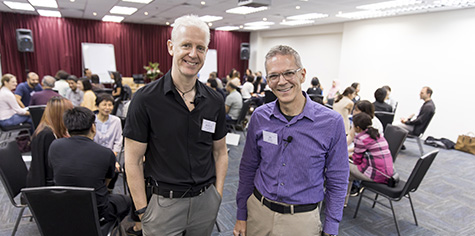
Why Choose The Coach Partnership for Corporate Coaching Courses in Singapore?
We are the leading coach training school in Singapore and Asia, and we hold ICF Level 2 accreditation, the level that leads to the PCC credential. Specific reasons to consider us:
- Ontological method, taught by the lineage that developed it: The ontological coaching certification delivers the Newfield curriculum, which has produced more than 65,000 graduates worldwide since Newfield was established in 1991. We brought these programs to Asia in 2010, first as Newfield Asia, and renamed in 2019.
- Assessors credentialed at or above the level they assess: The coach trainers hold ICF PCC or MCC, including Master Certified Coaches on the ontological faculty. ICF requires a Level 2 performance evaluation to be assessed at PCC minimum skill level.
- A faculty drawn from the USA, South America and the UK: Ontological coaching works through language, and language carries culture. A single-market faculty teaches a single-market view of what a leader sounds like.
- 12 to 15 nationalities in a typical cohort: Your fellow participants are your practice clients for nine months, so the range of leadership contexts in the room is the range you graduate able to coach.
- Corporate delivery alongside certification: The same faculty runs corporate coaching engagements, including internal coach training over two to five days, top team interventions and coach supervision. Trainers who coach senior leaders in the same week they teach bring live material into the classroom.
- Singapore time zone delivery: Programs run on Singapore time, with in-person conferences in Singapore and virtual conference and coursework between them, which removes the overnight scheduling problem.
You can compare all current coach training programs before speaking to anyone.
Your Certified Team Coaching Trainers
We assemble a team of globally-recognised experts from around the world. Most coaching providers offer one or two trainers; TCP offers six to eight on every programme. This is to reflect the breadth and depth of the ontological approach. No one person can adequately this subject.

Terrie Lupberger
MCC, Director of Training
More than 20 years as an executive coach and CEO, and a former ICF Board Member. She has contributed to published work on emotional intelligence in coaching.

Marcus Marsden
PCC, Managing Partner
Oxford-educated, with a background in brand, general and change management at Unilever and more than 30 years of business and management experience. He wrote “Start With Who” (2022), which argues that identity and context drive performance and have to be addressed before goal-setting can hold.

Chris Balsley
Somatic Trainer
30 years in coaching and professional practice, and author of “Stop Controlling, Start Leading”.

Beatriz Garcia
PCC, Somatic Trainer
More than 30 years of experience spanning strategic business planning and coaching. She teaches the body domain, which is where most of the somatic work in the program happens.
Interested in professional coach training—or looking for coaching and leadership development for your organisation? Speak with us and we’ll connect you with the right person.
Ontological Coaching Testimonials
It’s always been clear to me that certain people, people who exercise regularly and who eat healthy, people who sleep well and who don’t smoke or drink to excess, create different outcomes in life. Becoming certified as a health coach has cemented this understanding of health in a new way for me; a way that has allowed me to be even more outrageous with my clients as they take control of their health and aging and inspire those around them to do the same.

Chris Balsley, PCC
I loved The Health Coaching Program by The Coach Partnership! The tools I learnt equipped me to work with people at a deep and sustainable level. I love working with people to reveal the “why” of the goals they have on health, which often reveals the depth of what and who they truly care about!

Alice Chia, PCC
The Health Coaching Program with The Coach Partnership is a well-curated learning platform for appreciating essential well-being. I am grateful for the insights and resources shared by well-seasoned mentor coaches alongside an accomplished collective of health professionals, fitness specialists and wellness experts. Being attuned to health and wellness, not only nourishes and expands my coaching conversations with clients, but also sustains my own journey of well-being.

Derrick Tan, ACC
I am honored to be certified as a Health Coach by The Coach Partnership. This program served as a platform for me to practice integrating ontological, executive and health coaching in the realm of Healing. The practice reminded me how important listening intently into the depth of a client’s conversation is to Self-Care and Self Recovery. Much Gratitude to Mark Hemstedt and Dr. Kat for designing and giving me the opportunity to participate in this world class program.

Lina Sutton
The Health Coaching Program by The Coach Partnership journey helped me discover that everyone has different health and wellness goals and commitment to change. Health Coaching in combination with Ontological Coaching is an excellent space to serve the world. I am grateful for this experience.

Stefen Choo
The Health Coaching Program by The Coach Partnership was a wonderful program that expanded and deepened the way in which i support my clients through change. The course reinforced to me how vital it is to manage nutrition, physical fitness, sleep and stress. I am so pleased to be able to support my clients in making changes that improve the quality of their lives.

Katie Gray
As a Coach, Wellness Coaching had never been on my list of things to pursue. I was drawn to this course due to the caliber of the instructors and my fellow students; I hoped to rub shoulders with incredible and wise coaches. I now understand that health and wellness is embedded in nearly every issue brought into the coaching space. Wellness is integral to helping others, and | now have the confidence to explore this realm with my clients, friends and family!

Katie Lay, ACC, NCC
I am so thrilled to receive this certification. It is indeed, a humbling journey and honest conversation that I had ever experienced, coaching the clients. As their leader and coach, the journey makes me reflect how I have led them in the past and how I can be better moving forward.

Noor Afiza Mohd Yusof, ACC
Grateful for another eye opening year into the world of Health and Wellness. This brings a positive angle to 2020.
My thoughts are with Mark Hemstedt that brought me into coaching more than 10 years ago and I see his hand behind
some of the teachings. This learning has proven extremely efficient for my clients and perhaps even more for myself.
I am now a healthier human being thanks to The Coach Partnership program.

Pascal Coudeville
Thank you The Coach Partnership, for curating such an engaging and diverse program. I loved the broad range of medical topics presented by top notch experts, the Health Lens and the focus on building momentum. What a gift to coach people on their health and wellness journeys. I walk away with a renewed appreciation for the wisdom of listening to both our bodies and our hearts.

Ruth Gertler
Participating in the Health and Wellness Coaching programme has been a great experience. Bringing to bear an often overlooked domain in the Executive Coaching world, the insights, mentoring and collaboration with other coaches has been transformative for me and my clients. With new distinctions, I look forward to supporting others in helping them achieve their health and wellness goals.

Alex Talbot, PCC
The Health Coaching Program is amazing in its ability to go both broad and deep into different aspects of health–
physical, emotional and mental–as well as in providing Practical and effective tools to help clients create sustainable behaviour and habit changes. It’s made a positive impact not only to my role as a Coach, but also to my personal health and of my family and friends as well. Highly recommended for all Coaches!

Albert Atinon, ACC
Well-being is at the forefront of everyone’s concerns now. Being an executive coach, I sensed the presenting need to certify as a health & well-being coach as well. With the best of faculty & mentors to support, and coach colleagues on board, the journey has changed
me- as a person and as a coach! Truly grateful.

Harmeet Kaur Anand, PCC
“It is health that is real wealth and not pieces of gold and silver”
-Mahatma Gandhi
I now appreciate a whole new perspective on my own and other peoples health, which is invaluable in effective coaching. Thanks to the The Coach Partnership for such relevant, well designed and delivered program. I love working and coaching with clients on their happiness and health is the most important area!

Gordon Sutton
The journey to be a health and well-being coach is both ‘learningful’ (= meaningful learning) and enriching. As a coach, it enables me to value-add to the well-being of others.

Connie Chai
Begin Your Corporate Journey
Choosing a course looks like a comparison of contact hours and fees. Underneath, it is a decision about how you want to work with people, whether you are building a practice or leading a team you will still be leading next year. What a good program changes first is what you notice in a conversation. Acting on it is the longer half, and it carries on well after the course ends.
If you are weighing up corporate coaching courses in Singapore, the most useful next step is a conversation: where you want to be practicing in three years, which credential gets you there, and whether an ontological approach fits how you want to work. Get in touch and we will talk it through with you honestly, including whether a full certification or a shorter program fits what you are actually trying to do.

FAQs
Is There Demand for Corporate Coaches?
Yes, and it has grown steadily. ICF’s 2025 Global Coaching Study counted a record 122,974 coach practitioners worldwide, up 15% on 2023, with industry revenue of USD 5.34 billion. Asia grew 86% in coach practitioners across the 2019 to 2022 study period, the fastest of any region.
How Much Do Corporate Coaches Earn?
Earnings vary widely because most coaches practice part-time, but a full-time corporate coach with a corporate client base typically earns around USD 70,000 to USD 120,000 a year.
Will the Course Prepare Me for ICF Certification?
An ICF-accredited program is designed to. Level 1 covers the education and mentor coaching requirements for the ACC, and Level 2 covers them for the PCC and includes the performance evaluation. The part no program can complete for you is the client coaching hours. Confirm that mentor coaching and the performance evaluation sit inside the tuition, because those two are most often sold separately.
How Are Corporate Coaching Courses Assessed?
This is where accredited and non-accredited programs separate, because an accredited provider has to prove you can coach, not just that you turned up.
Observed coaching carries the most weight. At Level 2 the provider must observe six of your sessions with written feedback on each, then run a final performance evaluation at PCC minimum skill level. Some observe live, others assess a recording, usually a full session of 30 to 60 minutes submitted with a transcript and marked against the ICF Core Competencies.
Written work sits alongside it, typically a reflective essay of around 2,500 words on your development as a coach, or a case study of a client engagement. Shorter modular programs lean on presentations and attendance thresholds instead.
The ICF Credentialing Exam is separate again, assessed by ICF rather than your provider once you apply. Ask any provider which of these it uses, whether the performance evaluation sits inside the fee, and who does the assessing, because ICF requires a PCC-credentialed assessor at Level 2.
How Long Does It Take to Complete a Corporate Coaching Course?
Level 1 programs typically run three to six months and Level 2 programs nine to twelve, which is what the contact hours plus mentor coaching in the comparison table above add up to. Short internal coach training workshops take two to five days. Add time beyond the course for accumulating the client hours you need before applying.
Who Is the Ideal Candidate for a Corporate Coaching Course?
Someone with real organizational experience who is genuinely curious about people. Most have 10 or more years behind them, because credibility with a senior coachee comes partly from having sat in a comparable seat. Formal qualifications in psychology are not required. The one disqualifier is wanting to give advice, since a strong instinct to solve other people’s problems takes the longest to unlearn.
What Skills Do I Need to Be a Corporate Coach?
Deep listening is the foundation, and it is more demanding than it sounds: listening for what someone is committed to, underneath the content of what they say. You also need to hold silence, ask questions you do not know the answer to, and separate a judgment you are making from a fact you can verify. Commercial skill matters as much, starting with contracting cleanly with a sponsor.
How Do I Get Clients After Qualifying?
Most early corporate work comes through the network you already have, which is why career changers with a senior background build practices faster. Start inside your current employer before you leave, join a provider’s associate panel, and stay visible to your cohort, since coaches refer work they cannot take.
Recommended Books, Articles, and Podcasts on Corporate Coaching
A short list worth reading before you enroll, chosen because each one changes how you listen.
- “The Purple Book of Coaching” edited by Marcus Marsden (2024): Thirteen essays by our own faculty on consciousness, the generative power of language, the role of the body, passion and emotional agility. It is the closest you can get to the ontological approach without sitting in the classroom.
- “Language and the Pursuit of Happiness” by Chalmers Brothers (2005): The clearest introduction to the ontological premise that language generates reality and does not merely describe it. If this book interests you, ontological training will suit you.
- “Start With Who” by Marcus Marsden (2022): Argues that identity and context sit underneath performance, and that addressing who someone believes they are has to precede goal-setting. Written by our Managing Partner.
- “The Thin Book of Trust” by Charles Feltman: Now in its third edition and short enough to read in an hour. It breaks trust into four distinct assessments you can work on separately, which is immediately useful in team coaching.
- “Coaching for Performance” by Sir John Whitmore: The book that introduced the GROW model. Read it for the structure of a coaching conversation.
- “The Coaching Habit” by Michael Bungay Stanier (2016): Written for managers, and the best answer available to “how do I coach in ten minutes between meetings”.
- “Coaching for Leaders” podcast, hosted by Dave Stachowiak: Weekly since 2011, and strong on the management context corporate coaches work inside.
References
International Coaching Federation. (n.d.). Advanced Certification in Team Coaching (ACTC). International Coaching Federation.
https://coachingfederation.org/credentialing/icf-credentials-overview/actc/
International Coaching Federation. (n.d.). Coach education accreditation: Level 2 accreditation. International Coaching Federation.
https://coachingfederation.org/for-coach-educators/icf-accreditation/level-2/
International Coaching Federation. (n.d.). Core competencies. International Coaching Federation.
https://coachingfederation.org/credentialing/coaching-competencies/icf-core-competencies/
International Coaching Federation. (n.d.). Credentialing experience requirements. International Coaching Federation.
https://coachingfederation.org/credentialing/prepare-for-icf-credential-application/experience-requirements/
International Coaching Federation. (n.d.). Education and training requirements. International Coaching Federation.
https://coachingfederation.org/credentialing/prepare-for-icf-credential-application/education-training-requirements/
International Coaching Federation. (n.d.). Find coaching education. International Coaching Federation.
https://coachingfederation.org/education-professional-development/find-coaching-education/
International Coaching Federation. (n.d.). Renew your credential. International Coaching Federation.
https://coachingfederation.org/credentialing/renew-your-credential/
International Coaching Federation. (2025). 2025 ICF Global Coaching Study executive summary. International Coaching Federation.
https://coachingfederation.org/resource/2025-icf-global-coaching-study-executive-summary/
SkillsFuture Singapore. (n.d.). SkillsFuture Credit. MySkillsFuture. https://www.myskillsfuture.gov.sg/content/portal/en/career-resources/career-resources/education-career-personal-development/SkillsFuture_Credit.html
Interested in professional coach training—or looking for coaching and leadership development for your organisation? Speak with us and we’ll connect you with the right person.
Enquiry Form