
ICF Accredited Coach Training Program: The Complete Guide
ICF Accredited Coach Training Programs at a Glance
- What it is: Coach training ICF has reviewed against its Core Competencies, Code of Ethics and minimum hour requirements, at one of seven accreditation types.
- How it works: ICF accredits programs, not people. You complete an accredited program, then apply to ICF separately for your own credential.
- The levels: Level 1 runs 60 to 124 contact hours and leads to the ACC. Level 2 runs 125 to 175 hours and leads to the PCC. Level 3 requires an active PCC and leads to the MCC.
- Who it is for: Aspiring coaches, leaders adding coaching to their work, and credentialed coaches who need renewal hours.


Search “ICF accredited coach training program in Singapore” and the results run from 24-hour foundation courses to nine-month certifications. Every one can legitimately use the phrase. The badge is real, and it still does not tell you what the training actually qualifies you for.
That gap costs money. Coaches routinely finish a short accredited course, find it was accredited for continuing education rather than as a credential pathway, and pay twice for the program they should have taken first. The accreditation level resolves it: it fixes the hours, the mentor coaching, the performance evaluation, and which credential you can apply for. Read the level, and comparing Singapore programs comes down to the credential you want.

What is an ICF Accredited Coach Training Program?
An ICF accredited coach training program is a program that the International Coaching Federation has formally reviewed and approved, confirming that its curriculum, faculty, observation practices, and assessment meet ICF’s published standards.
Be careful with this one, because providers blur it: ICF accredits programs and credentials coaches. An ICF accredited coach training program is a real thing, because the accreditation attaches to the program. An ICF accredited coach is not, because accreditation never attaches to a person. A school earns accreditation; a person earns a credential, the ACC, PCC or MCC. When a training provider, meaning the school rather than the coach, calls its graduates ICF accredited, check whether the coach also holds a credential in their own name.
Accreditation is not a badge a training school can award itself. An accredited organization must give every student a set number of coach-specific contact hours for each level, mentor coaching, observed coaching with written feedback and a final performance evaluation. The level the school is accredited at, Level 1, Level 2 or Level 3, sets those thresholds. It must also keep a director of education accountable for curriculum, instructor training and every observation. Accreditation lasts three calendar years, then has to be renewed.

Two older labels still appear in program marketing and in ICF’s own credentialing pages. ACTP and ACSTH were the previous accreditation categories, replaced by the Level 1, Level 2 and Level 3 structure on 10 January 2022. If a provider’s page still leads with ACTP, its accreditation information has not been updated in more than four years, which is a reasonable prompt to ask when their current accreditation was last renewed.
Interested in becoming a coach?
Want your managers to coach more effectively?

What Does an ICF Credentialed Coach Do?
A coach trained through an ICF accredited program partners with a client in a structured conversation designed to move that client toward outcomes they define themselves. It is easier to see by contrast. A consultant diagnoses the problem and hands over a solution, a mentor tells you what worked for them, and a teacher delivers a syllabus. A coach offers none of that. The thinking stays with the client, and the coach’s work is to make that thinking sharper, which is why accredited training is built mostly on supervised practice rather than theory.
In practice, the work is narrower than most people expect. ICF’s Core Competencies commit the coach to a clear agreement for every session, presence, listening for what the client is both saying and not saying, evoking awareness rather than supplying answers, and partnering on the client’s own accountability. A trained coach does not diagnose or prescribe a plan, and does not turn the session into a conversation about their own experience.
Coaches trained this way apply one method to many contexts. The agreement, the listening, the questioning and the accountability stay the same whoever is in the chair, and only the subject the client brings changes. That is what makes the training portable across settings.
Some take executives through decisions and influence. Some work with intact teams on trust, or on the conversations a team keeps avoiding, a discipline ICF recognizes in its own right with the Team Coaching Competencies it published in 2020 and the Advanced Certification in Team Coaching it launched in 2023. Others work in career transition, health and wellbeing, or parenting. The methodology holds across all of them; the context changes.
The 2025 ICF Global Coaching Study shows what that work looks like week to week: active practitioners average 11.6 hours a week coaching, carry 12.4 active clients, and charge US$234 for a one-hour session. For anyone planning to practice, that is the shape of an established coaching business: roughly a day and a half a week in session, about a dozen clients on the books at any one time, and a fee that has to carry the preparation, admin and business development around it.

Benefits of an ICF Accredited Coach Training Program
Accreditation buys you six specific things.
Professional Credibility
Completing an accredited program tells the person deciding whether to hire you, usually a prospective client or an HR lead, that an independent body has reviewed your training against a published standard. Professional coaching reached 122,974 practitioners worldwide in 2025, up 13% in two years. In a market that size, the credential is how a corporate buyer or HR panel filters a shortlist before they even speak to you. Singapore has no statutory register for coaches, so the credential carries more of that weight here than it would in a licensed profession.

A Cheaper, Faster Route to the Credential
Graduating from a Level 1 or Level 2 program puts you on the Level 1/Level 2 application path. Taking the ACC as the example, that application costs US$175 for ICF members and US$325 for non-members and is reviewed in about four weeks. The same ACC applied for on training assembled elsewhere goes through the Portfolio path at US$475 and US$625, reviewed in about 14 weeks. PCC and MCC applications carry their own, higher fees. Your hours also arrive pre-verified, so you do not need to document a patchwork of courses and hope the reviewer accepts them.
Quality Assurance
ICF vets the curriculum, not just the hours. An accredited program must show its content maps to the Core Competencies and Code of Ethics, that its instructors hold active credentials, and that a named director of education is accountable for how students are assessed. The review repeats every three years.
Global Recognition
ICF has more than 62,000 members across over 150 countries, with chapters in more than 80. A credential earned in Singapore reads the same in London, Sydney or Toronto, so if you move markets or take on multinational clients, you are not starting your qualification again.
Mentoring and Assessment Built In
Every accredited credential-pathway program must build in mentor coaching, observed practice with written feedback and a final performance evaluation. Those are the components coaches most often end up sourcing separately after the fact. Inside an accredited program you are not left to find a mentor coach, someone senior to observe you and an assessor on your own, and chase each of them separately once the teaching has finished.
An Ethical Standard Clients Can Check
Accredited providers are held to ICF’s Code of Ethics, and ethics is taught and examined. That obligation continues after you qualify: coaching ethics is the one subject ICF mandates by name in every renewal cycle. The benefit runs both ways. A client gets recourse against a published code, and you get a clear line to point to when a conversation starts drifting into territory that belongs to a therapist or a manager.
One thing accreditation does not cover is the business around the coaching. ICF reviews a program against the Core Competencies and the Code of Ethics, so setting up a practice, pricing it and finding your first clients sit outside that standard. Programs that do teach it run it alongside the competency work, and once you hold a credential ICF recognizes that material as Resource Development units at renewal. In practice your first clients arrive before you graduate. The ACC asks for 100 hours of client coaching with at least eight clients, 75 of them paid, which means you are finding clients while you train, usually through your cohort, your existing network and reduced-fee work that turns into referrals later. If building a practice is part of why you are training, ask each provider what they teach on the business side and what alumni support looks like after you graduate.
Who Should Take an ICF Accredited Coach Training Program ?
Accredited coach training suits three groups, and they want different things from it.
- Aspiring professional coaches: People who intend to practice, whether full time, alongside consulting work, or as a second career. They are training in order to hold a credential in their own name, so Level 1 or Level 2 accreditation is not optional for them.
- Leaders, managers and HR professionals: People who will not set up their own practice but want to lead through coaching conversations rather than instruction. They often start with a shorter accredited course and decide about a credential later. Nothing is wasted if the program is accredited, because the hours count.
- Already-credentialed coaches: Coaches returning for team coaching, supervision or a specialization, who need renewal units as well as the skill.
There is no prerequisite degree for Level 1 or Level 2 in ICF’s standards. Level 3 is the exception: you must hold an active PCC credential to enroll.
Do You Need an ICF Credential to Be a Coach?
No. Coaching is not a licensed profession in Singapore, as in most markets, which is exactly why buyers lean on the ICF credential: it is the one signal that an independent body has reviewed the training behind the coach.
The credential is a filter, not a license. It matters most when someone else decides whether to hire you: a procurement team scoring vendors, an internal coaching panel screening a list of names, or an executive sponsor comparing three proposals on paper. None of them has watched you coach, so the credential is what gets you past the screen and into the room. If your clients come to you by referral, the credential works differently. It is less a gate you have to pass and more reassurance that the coach they were pointed to has trained to a standard.
What has changed is the default expectation. Clients now screen for credential as a matter of course, and a coach without one has to explain the absence. The practical case is straightforward: the credential opens conversations, and going without one closes some before they start.
ICF is not the only credible accrediting body. Established independent bodies accredit programs in their own fields, the National Board for Health & Wellness Coaching among them. What is worth confirming is that the body is genuinely independent of the school: check that it publishes its own standards, that it accredits programs from a range of providers, and that the program you are considering appears in its public directory.
Types of ICF Accredited Coach Training Programs
ICF offers seven accreditation types. Three are credential pathways, one is for continuing education, and three are advanced specializations. The three pathway levels compare like this.
| Level 1 | Level 2 | Level 3 | |
|---|---|---|---|
| Contact learning hours | 60 to 124 | 125 to 175 | 75 or more, completing the 200+ hours the MCC requires |
| Leads to | ACC | PCC | MCC |
| Entry requirement | None | None | Active PCC |
| Mentor coaching | 10 hours over 3+ months | 10 hours over 3+ months | 10 hours over 3 months |
| Observed sessions | 5, with written feedback | 6, with written feedback | 5, with written feedback |
| Performance evaluation | At ACC skill level | At PCC skill level | Not specified by ICF |
The table above covers the three credential pathways only, because those are the routes to a credential and you choose one of them. The other four accreditation types are additions to a credential rather than alternatives, and they compare like this:
| Continuing Coach Education | Team Coaching | Coaching Supervision | Mentor Coaching | |
|---|---|---|---|---|
| Contact hours | Up to 40 per program | 60 or more, half synchronous | 60 or more, at least 48 supervision-specific | 60 or more, at least 48 mentor-coach-specific |
| Leads to | Renewal units, not a new credential | ICF Advanced Certification in Team Coaching (ACTC) | No ICF credential, a distinct service you can offer | ICF Mentor Coach Specialization (MCS) |
| Who it is for | Credentialed coaches earning renewal units | Coaches working with a whole team as the client | Experienced coaches training to supervise others | Coaches who want to deliver mentor coaching |
| Also required | Units split across Core Competencies and Resource Development | Two observed team sessions and five hours of supervision | Faculty must hold an active PCC or MCC | Five observed mentor sessions, five mentoring-on-mentoring sessions, final assignment |
Level 1 (ACC)
- What it is: A complete entry-level coaching education, designed as a self-contained path for someone starting out.
- What you get: The full Level 1 column above as one package, typically delivered over three to six months. No prior coaching experience is assumed, and everything the ACC asks of your education is completed inside the program.
- Why it matters: Completing it meets the full education criteria for the Associate Certified Coach credential and lets you apply through the faster, cheaper Level 1 path.
Level 2 (PCC)
- What it is: A complete education for people starting out or building on earlier training, pitched at a higher skill threshold.
- What you get: The Level 2 column above in a single program, usually six to twelve months of study. No prior training is assumed, so you can start here without holding a credential first.
- Why it matters: It meets the education requirement for the Professional Certified Coach credential, which most corporate buyers treat as the working standard. The evaluation threshold, not just the extra hours, is what separates it from Level 1.
Level 3 (MCC)
- What it is: Advanced education focused on mastery, and the only level with an entry requirement.
- What you get: Advanced, mastery-focused work rather than a second foundation. The hour count sits below Level 2 because Level 3 assumes the groundwork is done; what it adds is depth of practice and assessment at the highest standard ICF sets. ICF puts the MCC’s total coach-specific education requirement at 200 or more hours, and the PCC-level training you already hold counts toward that total.
- Why it matters: It is the education route to the Master Certified Coach credential, ICF’s highest and rarest. You must hold an active PCC to enroll.
Continuing Coach Education (CCE)
- What it is: Accredited professional development for coaches who already hold a credential, rather than a route to a new one.
- What you get: Units in one of two categories. Core Competencies covers material that deepens or extends the ICF competencies. Resource Development covers adjacent skills such as assessments, tools, business building, and personal growth. A single CCE program may carry up to 40 hours.
- Why it matters: Renewal requires 40 units every three years. CCE is how most credentialed coaches earn them.
Advanced Accreditation in Team Coaching
- What it is: Accreditation for programs teaching coaches to work with a whole team as the client, which is a different discipline from coaching individuals.
- What you get: At least 60 contact hours, half of them synchronous, with 80% mapped to the ICF Team Coaching Competencies. Also two observed team coaching sessions and five hours of coaching supervision.
- Why it matters: It is the education pathway to ICF’s Advanced Certification in Team Coaching (ACTC), which has its own exam and requires five or more team coaching engagements.
Advanced Accreditation in Coaching Supervision
- What it is: Accreditation for programs that train experienced coaches to supervise other coaches.
- What you get: 60 or more contact hours, at least 48 of them supervision-specific, taught by faculty holding an active PCC or MCC. Programs center on reflective practice, supervision methodology, ethics and supervision-on-supervision.
- Why it matters: Supervision is where a coach’s own practice gets examined, and organizations buying coaching at scale increasingly ask for it. It is a distinct service a senior coach can offer alongside their coaching practice.
Advanced Accreditation in Mentor Coaching
- What it is: Accreditation for programs preparing coaches to deliver the mentor coaching that every credential applicant needs.
- What you get: 60 or more contact hours, at least 48 of them mentor-coach-specific, plus five observed mentor coaching sessions, five mentoring-on-mentoring sessions and a final assignment.
- Why it matters: Every credential applicant needs 10 hours of mentor coaching. Completing this program meets the education requirement for ICF’s Mentor Coach Specialization (MCS), and earning the MCS lets you provide that mentor coaching to ACC, PCC and MCC applicants.

What You Will Learn in an ICF Accredited Coach Training Program
Every accredited program is built on the same two documents: the ICF Core Competencies and the Code of Ethics. What differs is the methodology a school teaches through, and how much of the learning happens in live practice.
Expect the curriculum to cover:
- The coaching agreement: How to contract clearly with a client and with a sponsoring organization, including what is confidential and what is reported.
- Presence and listening: Staying present with the client rather than with your own next question, and uncovering the assumptions underneath what is said.
- Powerful questions: Asking what opens something rather than what confirms what you already suspect. This is the skill most participants report as hardest to unlearn their way into.
- Evoking awareness: Asking in a way that lets the client arrive at the insight themselves. Hand them the answer and you have stopped coaching and started advising.
- Client accountability: Partnering on what the client will do, without becoming the person who chases them.
- Ethics and boundaries: Recognizing where coaching ends and therapy, mentoring, or consulting begins, and what to do at that boundary.

Expect substantial supervised practice too. Accredited programs require observed coaching with written feedback, which means someone senior watches you work and tells you what they saw. Most participants say this is the part that changes their coaching.
ICF itself is methodology-neutral. It accredits against the Core Competencies and the Code of Ethics rather than any one school of practice, which is why two accredited programs can teach very differently. Some schools add a methodology on top. Ontological coaching works through language, emotions and the body, on the basis that changing what someone does rarely holds unless the way they see the situation changes too. Others build on solution-focused practice, positive psychology or NLP. Methodology is a genuine differentiator, so understand it before you enroll.
How to Choose the Right ICF Accredited Coach Training Program in Singapore
Start by confirming the accreditation independently. ICF runs a free searchable directory of every program it accredits, the Education Search Service, and a program that does not appear in it is not currently accredited, whatever its website says. Check there first, then check the level.
Once accreditation is confirmed it stops being a useful comparison point, because every shortlisted program has it. Three factors do the real work.
| Factor | What to compare | What it changes for you |
|---|---|---|
| Location and delivery | Online, in person or hybrid; where the in-person days are held, and which time zone the live sessions run on | Whether the schedule fits your working week, and how much of your observed practice happens in a room |
| Accreditation type | Level 1, Level 2, Level 3 or CCE, and when that accreditation was last renewed | Which credential you can apply for at the end, and whether you pay once or twice |
| Specialization | Executive, team, health and wellbeing, career transition or life coaching, plus how many trainers the program fields and what they hold | The clients you can credibly take on, and what you can charge them |
Location and Delivery Method
Decide between online, in person and hybrid, and check the schedule against your life, not the brochure. This trips up Asia-based coaches most often. Many of the best-known schools are headquartered in North America or Europe and run live sessions on those time zones. A notable exception is The Coach Partnership: headquartered in Singapore, it runs its Newfield certification on Asia time with in-person conferences here, so live sessions fall inside your working week.
Can we not mention ourselves here? Eg A notable exception is The Coach Partnership, headquartered in Singapore .. blah blah …
Studying on another region’s clock turns a nine-month cohort into nine months of late nights, and it erodes the peer relationships that make cohort learning work.
Ask what the in-person component actually is. Observed practice in a room reads differently from observed practice on a screen, and a program on regional time with conferences in Singapore gives you that without rebuilding your calendar around someone else’s working day.
Accreditation Program Type
Match the level to where you want to end up, not to where you are now. If your goal is the PCC, a Level 2 program takes you there in one commitment; two stacked Level 1 courses will not, and you will pay twice. If you already hold a credential and need renewal units, a CCE-accredited program is the right instrument and a full credential pathway is overkill.
Ask three concrete questions of any provider: which level are you accredited at, when was that accreditation last renewed, and how much of the mentor coaching and assessment is included in the fee. The third question tells you what the total actually is, since some programs bundle those components and others bill them later.
Specialization
Programs cluster around a niche: executive and organizational coaching, team coaching, health and wellbeing, career transition, parenting, life coaching. Choose for the clients you intend to serve. It affects earnings too: 80% of coaches with ten years’ experience focus on business coaching, against 48% in their first year, and they command higher fees.
Look at the faculty as closely as the curriculum: who observes your coaching, what credential they hold, and how many trainers the program fields. One or two trainers gives you one or two styles to learn from; a larger faculty gives you a range to find your own practice inside.
How Much Does an ICF Accredited Coach Training Program Cost in Singapore?
ICF accredited coach training in Singapore starts at about SGD 1,600 for a short introductory course. Full credential pathways that build in mentor coaching, observed practice, the performance evaluation and in-person conferences cost considerably more, and business-school coaching certificates run above SGD 20,000. The useful comparison is what each fee covers on the way to your credential, not the headline number.
Tuition varies for four reasons:

- Accreditation level and hours: A Level 2 program delivers at least 125 contact learning hours against Level 1’s 60, and that difference is the single largest driver of price.
- What is bundled: Mentor coaching, observed sessions and the performance evaluation are required components. Some programs include them in one fee; others quote a lower headline price and charge separately.
- Delivery format: In-person conferences cost more to run than webinars, and multi-day formats carry venue and faculty travel.
- Faculty seniority: Programs staffed by MCC-credentialed trainers and published authors price above programs staffed entirely at ACC and PCC level.
Budget outside tuition too. The ACC application is US$175 as an ICF member or US$325 as a non-member, with membership charged annually on top, and any mentor coaching your program excludes has to be bought separately.
How you pay matters as much as the total. Most established providers take a deposit and spread the balance over interest-free installments, and many will invoice an employer directly against a learning and development budget. Before committing, ask for the deposit amount, the installment terms, and whether they will invoice your company.
If funding is part of your decision, ask the provider directly. SkillsFuture support in Singapore is set course by course rather than provider by provider, so eligibility has to be confirmed for the exact program you are considering.
Programs eligible for SkillsFuture support tend to be a structured introduction to coaching, with step-by-step instruction and classroom-based assessment. That suits someone finding out whether coaching is for them. If you want deeper development, meaning personal growth, a coaching practice you sustain over years, and learning you apply well beyond the classroom, look for a longer certification built around supervised practice with real clients.
Becoming an ICF Credentialed Coach: Training and Certification
Training is one of four requirements. The full ACC pathway looks like this, and the components can run in parallel rather than strictly in sequence.
Step 1 Complete an ICF Accredited Coach Training Program
Complete a Level 1 or Level 2 program in full, including the observed sessions and the final performance evaluation. The levels differ in more than hours: Level 1 assesses you against the Core Competencies at ACC proficiency, Level 2 at the higher PCC proficiency. Either one also puts you on ICF’s Level 1 or Level 2 application path, with a lower fee and a review of about four weeks, against roughly 14 if you assemble your own training.
Step 2 Log the Required Coaching Experience Hours
The ACC needs 100 hours of client coaching with at least eight clients, 75 of them paid, and 25 of the 100 within the 18 months before you apply. A qualifying hour is one 60-minute session with a client who engaged you as their coach; a 30-minute session counts as half. Being coached yourself does not count.
Thresholds rise steeply above that: the PCC needs 500 hours with 25 clients, 450 paid; the MCC needs 2,500 hours with 35 clients, 2,250 paid. Start your log on day one of training. Reconstructing it two years later is hard.
Step 3 Work With a Mentor Coach
You need 10 hours of mentor coaching over at least three months, from a mentor credentialed at or above the level you are applying for. The three-month floor is deliberate, so feedback has time to change your practice. This runs alongside Step 2 rather than after it. Most people log client hours and complete their mentor coaching in the same months, and many accredited programs build the 10 hours into the training itself.
It is feedback on your coaching against the Core Competencies, not on your business or career. Up to seven of the 10 hours may be in a group of no more than 10, the rest one to one. For ACC applicants the mentor must hold a PCC, an MCC, or an ACC renewed at least once.
Step 4 Pass the ICF Credentialing Assessment
Every credential applicant must pass a performance evaluation: a recorded coaching session with a written transcript, assessed against the Core Competencies. Who assesses it depends on your route. Level 1 and Level 2 programs build the evaluation in, so if you apply for the ACC or PCC on those paths you have already passed it and submit nothing further. On the Portfolio path, or for the MCC, you submit your recordings and transcripts to ICF with your application.
Then you sit the exam. ACC applicants take the ACC Exam; PCC and MCC applicants take the ICF Credentialing Exam. Both test how you apply the Core Competencies and the Code of Ethics to a live coaching situation.
That is the practical case for a program that builds every education requirement in. Our Newfield Coach Certification Program, accredited at Level 2, includes everything ICF asks of your training, the performance evaluation among it, so the exam is the only assessment left to take with ICF.
Earning the credential is not the last step. Every ICF credential runs on a three-year renewal cycle, covered in the FAQs below.
Why Choose The Coach Partnership for ICF Accredited Coach Training in Singapore?
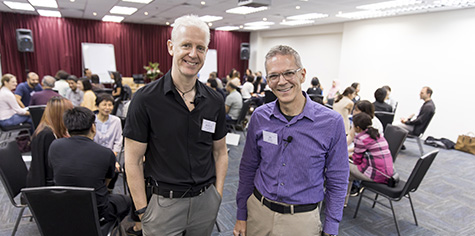
- You learn from someone who helped write the ICF standard: Our Director of Training, Terrie Lupberger, MCC, was part of the group that wrote ICF’s coaching competencies, the foundation for the performance evaluations ICF uses to assess every credential applicant. She is also a former Board Member of ICF Global and has led coach training at university level. You are taught by someone who helped write the standard you will be assessed against.
- I don’t think this is the strongest move for us, because it makes us seem 2nd to Newfield Network, who still exist. I think leading on Terrie as a former Board Member of ICF Global is better, no?
- Your trainers wrote the field’s standard texts: Our faculty includes Chalmers Brothers, author of Language and the Pursuit of Happiness, Charles Feltman, author of The Thin Book of Trust, and our Managing Partner Marcus Marsden, author of Start With Who. You learn those distinctions from the people who defined them, not from a trainer reciting someone else’s material. I think we can add Start With Who in there. Why not?!
- A faculty rich in Master Certified Coaches: Most programs are staffed largely at PCC level. We field multiple Master Certified Coaches, ICF’s highest and rarest credential, among them Carol C. Courcy, Croft Edwards, Angela Cusack, Karin Meerhoff, Monique Fanselow, and Tini Fadzillah.
- Ten trainers and 24 mentor coaches, not one or two: Most schools run a single trainer or a pair. Our flagship program draws on ten trainers and 24 mentor coaches from our worldwide network, all ICF certified at PCC or above.
- Trainers who are practitioners: Our senior faculty held senior roles inside multinationals like the ones you will coach, and that work continues today through our parent company, The Works Partnership, so the examples you practice on come from live organizational work, the same problems your own clients will bring you.
- Our Managing Partner, Marcus Marsden, has worked in leadership and change for more than 25 years, after brand and general management at Unilever.
- Alex von Behr, our Leadership Strategist, spent 35 years at Kraft, McKinsey, Coca-Cola and Unilever, the last eight as Unilever’s Global Chief Customer Officer in Singapore.
- Eya Pagdanganan, NBC-HWC, PCC, spent 25 years at Unilever, Mead Johnson Nutrition, American Express and Royal DSM.
- Chris Balsley, our lead somatic trainer, has partnered with McKinsey and coaches leaders from the C-suite to mid-level managers in multinationals, Fortune 100 companies and the military.
- D N Prasad, PCC, our Talent and Culture Strategist, spent seven and a half years at Infosys and more than 11 years at Google, finishing there as Director and Head of Google People Services for APAC. His most recent corporate role was Senior Director, People & Organization, at GovTech Singapore.
- Dr. Katrina Gisbert-Tay, PCC, NBC-HWC, our Health Coaching Director, took an honors degree in psychology before qualifying in medicine, and was the first National Board Certified Health and Wellness Coach in Asia.
- I think another one of our advantages viz a viz our competition is that we really are practitioners. Marcus Marsden, Alex v Behr, Eya P, etc have worked in MNCs’ at a senior level. Marcus has been working in Leadership and Change for 25+ years. Chris has partnered with McKinsey. (Think of it like this – Newfield Network have Julio, an early voice. Alan is the scholar – 4 massive books – in contrast, we are the practitioners, evidenced by our people and our link to TWP. How you write that, I’ll leave to you, but I think it’s an attractive proposition.
- The somatic domain taught by specialists: We run dedicated somatic trainers, Chris Balsley, Beatriz Garcia and Sari Marsden, so the body, a full third of ontological work, is taught with rigor where most programs touch it only in passing.
- Newfield, delivered in Asia on Singapore time: We brought the Newfield program to Asia and run it on regional schedules, with in-person conferences in Singapore, so you get the face-to-face dimension without rebuilding your life around a North American calendar.
Our flagship coach training program is the nine-month Newfield Coach Certification Program, ICF accredited at Level 2. It carries over 125 synchronous and asynchronous training hours, with 12 days of experiential workshops in Singapore, teleclasses and peer group learning. Every participant gets six hours of coaching and six hours of mentoring on their own coaching, supported throughout by a senior Newfield Certified Coach.
Graduates earn Newfield Coach Certification, with over 60 coach-specific training hours that count toward an upgrade to the PCC or toward renewing an ICF credential.
It is built on ontological coaching, the Newfield methodology refined over three decades, which works through language, emotions and the body rather than behavior alone. Two modules run across three conferences: 29 October to 1 November 2026 in Singapore, 1 to 4 April 2027 online, and 26 to 29 August 2027 in Singapore.
For coaches who already hold a credential, our team coaching certification runs six months, delivers 60+ training hours on the ICF Team Coaching Competencies, and carries up to 45 continuing coach education units. We also run a health coaching certification accredited by the National Board for Health & Wellness Coaching, the first from a coach training company in Asia, and executive coaching for organizations.
Graduating is not the end of it. Our Re-immersion Program lets alumni return to any conference they have completed, which is how many graduates earn renewal units while going deeper in the material. They tell us they learn more the second time, because they arrive with real coaching hours behind them.
We are marking our 20th Newfield program in Asia with a renewal pathway for credentialed coaches: 25% off the Foundations of Ontological Learning program. It carries 60 recognized training hours toward your renewal or toward an upgrade to the ICF PCC credential, plus six hours of coaching with one of our program coaches.
Your ICF Credentialed Coach Trainers
Our programs are led by an international faculty of ICF-credentialed coaches, several of them Master Certified Coaches, all trained in the Newfield ontological tradition. The core training team includes:

Terrie Lupberger
MCC, Director of Training
Part of the group that wrote ICF’s coaching competencies, the foundation for the performance evaluations ICF uses to assess every credential applicant, and a former Board Member of ICF Global. She is also a former CEO of Newfield Network USA, one of the original ontological coaching schools, so you learn the method close to its source.

Marcus Marsden
PCC, Managing Partner
Lead trainer on the Newfield ontological coach training program, an ICF-certified executive coach, and author of Start With Who.

Chris Balsley
Somatic Trainer
Lead somatic trainer for Newfield Asia, a US Air Force veteran and a pioneer of TRE (Tension and Trauma Releasing Exercises) in PTSD work with veterans. He has taught trauma release to military units deploying to and returning from Afghanistan and Iraq, and teaches the body domain that sets ontological coaching apart.

Beatriz Garcia
PCC, Somatic Trainer
A Newfield Certified Ontological Coach and somatic trainer on the Newfield program.

Tini Fadzillah
MCC, Founding Partner
A Newfield Certified Ontological Coach and one of the most senior ontological coaches in the region.

Chalmers Brothers
PCC
Author of Language and the Pursuit of Happiness, a core text used in Newfield programs worldwide.

Carol C. Courcy
MCC
Trained in ontological coaching since 1990 and a former Vice President of Newfield Network USA, with more than 6,000 hours of coaching.

Sari Marsden
PCC, Somatic Trainer
A former Nike athlete and Nike Training Club trainer, gold medalist for Team Singapore in fitness physique competition and co-author of Fit to Lead, who develops the body dimension of ontological practice.
Ontological Coaching Testimonials
It’s always been clear to me that certain people, people who exercise regularly and who eat healthy, people who sleep well and who don’t smoke or drink to excess, create different outcomes in life. Becoming certified as a health coach has cemented this understanding of health in a new way for me; a way that has allowed me to be even more outrageous with my clients as they take control of their health and aging and inspire those around them to do the same.

Chris Balsley, PCC
I loved The Health Coaching Program by The Coach Partnership! The tools I learnt equipped me to work with people at a deep and sustainable level. I love working with people to reveal the “why” of the goals they have on health, which often reveals the depth of what and who they truly care about!

Alice Chia, PCC
The Health Coaching Program with The Coach Partnership is a well-curated learning platform for appreciating essential well-being. I am grateful for the insights and resources shared by well-seasoned mentor coaches alongside an accomplished collective of health professionals, fitness specialists and wellness experts. Being attuned to health and wellness, not only nourishes and expands my coaching conversations with clients, but also sustains my own journey of well-being.

Derrick Tan, ACC
I am honored to be certified as a Health Coach by The Coach Partnership. This program served as a platform for me to practice integrating ontological, executive and health coaching in the realm of Healing. The practice reminded me how important listening intently into the depth of a client’s conversation is to Self-Care and Self Recovery. Much Gratitude to Mark Hemstedt and Dr. Kat for designing and giving me the opportunity to participate in this world class program.

Lina Sutton
The Health Coaching Program by The Coach Partnership journey helped me discover that everyone has different health and wellness goals and commitment to change. Health Coaching in combination with Ontological Coaching is an excellent space to serve the world. I am grateful for this experience.

Stefen Choo
The Health Coaching Program by The Coach Partnership was a wonderful program that expanded and deepened the way in which i support my clients through change. The course reinforced to me how vital it is to manage nutrition, physical fitness, sleep and stress. I am so pleased to be able to support my clients in making changes that improve the quality of their lives.

Katie Gray
As a Coach, Wellness Coaching had never been on my list of things to pursue. I was drawn to this course due to the caliber of the instructors and my fellow students; I hoped to rub shoulders with incredible and wise coaches. I now understand that health and wellness is embedded in nearly every issue brought into the coaching space. Wellness is integral to helping others, and | now have the confidence to explore this realm with my clients, friends and family!

Katie Lay, ACC, NCC
I am so thrilled to receive this certification. It is indeed, a humbling journey and honest conversation that I had ever experienced, coaching the clients. As their leader and coach, the journey makes me reflect how I have led them in the past and how I can be better moving forward.

Noor Afiza Mohd Yusof, ACC
Grateful for another eye opening year into the world of Health and Wellness. This brings a positive angle to 2020.
My thoughts are with Mark Hemstedt that brought me into coaching more than 10 years ago and I see his hand behind
some of the teachings. This learning has proven extremely efficient for my clients and perhaps even more for myself.
I am now a healthier human being thanks to The Coach Partnership program.

Pascal Coudeville
Thank you The Coach Partnership, for curating such an engaging and diverse program. I loved the broad range of medical topics presented by top notch experts, the Health Lens and the focus on building momentum. What a gift to coach people on their health and wellness journeys. I walk away with a renewed appreciation for the wisdom of listening to both our bodies and our hearts.

Ruth Gertler
Participating in the Health and Wellness Coaching programme has been a great experience. Bringing to bear an often overlooked domain in the Executive Coaching world, the insights, mentoring and collaboration with other coaches has been transformative for me and my clients. With new distinctions, I look forward to supporting others in helping them achieve their health and wellness goals.

Alex Talbot, PCC
The Health Coaching Program is amazing in its ability to go both broad and deep into different aspects of health–
physical, emotional and mental–as well as in providing Practical and effective tools to help clients create sustainable behaviour and habit changes. It’s made a positive impact not only to my role as a Coach, but also to my personal health and of my family and friends as well. Highly recommended for all Coaches!

Albert Atinon, ACC
Well-being is at the forefront of everyone’s concerns now. Being an executive coach, I sensed the presenting need to certify as a health & well-being coach as well. With the best of faculty & mentors to support, and coach colleagues on board, the journey has changed
me- as a person and as a coach! Truly grateful.

Harmeet Kaur Anand, PCC
“It is health that is real wealth and not pieces of gold and silver”
-Mahatma Gandhi
I now appreciate a whole new perspective on my own and other peoples health, which is invaluable in effective coaching. Thanks to the The Coach Partnership for such relevant, well designed and delivered program. I love working and coaching with clients on their happiness and health is the most important area!

Gordon Sutton
The journey to be a health and well-being coach is both ‘learningful’ (= meaningful learning) and enriching. As a coach, it enables me to value-add to the well-being of others.

Connie Chai
Begin Your ICF Accredited Coach Training Journey
Coach training changes more than your professional options. Participants describe it changing how they listen at home as much as how they coach at work, and that is the part no accreditation standard can specify.
If you are weighing programs, we would rather have a real conversation than send you a brochure. Tell us where you are and which credential you are aiming for, and we will say honestly whether our program fits or whether something else serves you better. Conference 1 of the 2026 cohort runs 29 October to 1 November in Singapore, and in-person places are limited.
Reach us at info@thecoachpartnership.com or on (+65) 6338 2280, or complete the enquiry form at the bottom of this page.

Interested in becoming a coach?
</a hre”https://www.thecoachpartnership.com/coach-training-programs-coaching-certification-singapore/”> TCP coach training page, Newfield Coach Certification Program, ICF Level 2
FAQs
Will an ICF Accredited Coach Training Program Prepare Me for ICF Certification?
Yes, if it is accredited at Level 1, Level 2 or Level 3. Those are the credential pathways, and completing one satisfies the education requirement in full, mentor coaching and performance evaluation included. CCE-accredited programs are the exception: excellent development, and they carry renewal units, but they do not complete a pathway on their own. Confirm which of the seven types a program holds, because “ICF accredited” covers all of them.
Which ICF Level Should I Start With?
For most people intending to practice, the honest answer is Level 2, because the PCC is the credential corporate buyers ask for and Level 2 reaches it in a single commitment. Level 1 earns its place in two situations. You want coaching skills for a leadership role with no intention of practicing professionally, or you cannot commit the time or budget yet and would rather hold a credential now than none. Level 3 is closed until you hold an active PCC. If you are torn between the two, price both routes all the way to the PCC, not just to the certificate.
Is an ICF Coaching Certification Worth It?
Yes, on both routes into the work. If your clients come through corporate buyers, HR functions or coaching panels, the credential is close to a prerequisite and pays for itself in access. If you build through personal referral, the training is what earns those referrals and the credential confirms it. The 2025 ICF Global Coaching Study puts the commercial picture plainly: earnings build with time in practice, with coaches past ten years averaging US$69,721 a year against a global average of US$49,283.
Can I Get an ICF Coaching Certification in Singapore?
Yes. Singapore has multiple ICF accredited providers at Level 1 and Level 2, with formats ranging from fully online to in-person cohorts, and there is an active ICF Singapore chapter. Because ICF credentials are awarded centrally rather than by country, a credential earned through a Singapore-based program is identical to one earned anywhere else. Training locally also gives you cohort peers in your own market, which matters when you start looking for practice clients.
Can I Use SkillsFuture Credit for ICF Coach Training in Singapore?
Only where the specific course is listed on MySkillsFuture. The credit is granted to you, SGD 500 in opening credit from age 25, but it is spent course by course, and the listing decides eligibility rather than the provider’s ICF accreditation. Search the exact course title in the MySkillsFuture directory, and if it is not there, ask the provider whether that program is credit-eligible and in which format, since a provider can have one course listed and another not. The SkillsFuture Credit (Mid-Career) top-up of SGD 4,000 at age 40 is narrower again, covering full qualifications from the institutes of higher learning and SkillsFuture Career Transition Programmes among others, so a privately run coach certification is unlikely to qualify unless it appears on that list.
Do I Need to Complete Level 1 Before Level 2?
No. Level 2 programs are complete educations in their own right, and ICF sets no entry requirement for either. Whether stacking makes sense is a financial question, not a regulatory one: if you already want the PCC, going straight to Level 2 usually costs less than paying for two programs.
Why Does Tuition Differ Between ICF Accredited Programs?
Accreditation sets a minimum, and providers are free to exceed it. Two Level 2 programs can differ in contact hours, faculty seniority, cohort size, whether mentor coaching and the evaluation are bundled, and whether any of it happens in a room. Compare total cost to credential, not headline price: tuition, plus mentor coaching you would buy separately, plus the assessment, plus the ICF application fee. Ask each provider for that total in writing.
Is Online ICF Accredited Coach Training as Effective as Face to Face?
For the competency content, yes, and ICF accredits fully online programs at every level. The difference shows in the relational and somatic work. Reading a client’s posture, noticing a shift in mood, practicing your own presence: all are harder to teach through a screen, and harder to assess. Cohort bonds also form faster in person. A hybrid program with concentrated in-person conferences is the practical middle path. Whichever you choose, check live session times against your own time zone.
Does ICF Accreditation Include Business or Marketing Training?
Not as a requirement. ICF accredits a program against the Core Competencies and the Code of Ethics, and neither covers marketing, pricing or running a practice, so two accredited programs can differ completely here. Some build in practice-building sessions or an alumni community that keeps referrals moving; others stay entirely on coaching craft. Ask the provider what is included, because the 2025 ICF Global Coaching Study puts the average practitioner at 12.4 active clients and US$234 an hour, and reaching that is a business exercise as much as a coaching one. Once you are credentialed, ICF does recognize this material: business building sits in the Resource Development category, which can supply up to 16 of the 40 units you need every three years.
How Do I Maintain My ICF Credential?
Renew every three years with 40 continuing coach education units. At least 24 must be Core Competencies, three of those specifically coaching ethics, which ICF covers with a free online course. Up to 16 may come from Resource Development: business building, assessments, personal growth. Re-immersing in a program you have already taken is a common way to earn the Core Competency units while deepening your practice.
Recommended Books, Articles, and Podcasts on Corporate Coaching
- Language and the Pursuit of Happiness by Chalmers Brothers: The entry point to generative language and the ontological view of conversation, by one of our trainers.
- The Thin Book of Trust by Charles Feltman: A short, practical treatment of trust as four assessments rather than a feeling, by a member of our faculty. Useful well beyond coaching.
- Start With Who by Marcus Marsden: Our Managing Partner’s book on why identity and context drive performance, and why working on goals before working on who you believe you are rarely holds.
- The Purple Book of Coaching by The Coach Partnership team: A practical companion for coaches working with the Newfield distinctions.
- Fit to Lead by Marcus and Sari Marsden: On the connection between physical practice, leadership, and the body as a domain of learning.
- TINITALK, hosted by Tini Fadzillah, MCC: Our podcast, with faculty episodes including trust with Charles Feltman and somatics in leadership with Chris Balsley.
- The Coach Partnership articles: Ongoing writing from our trainers on coaching, leadership, and ontological practice.
References
International Coaching Federation. (n.d.). ICF accreditation. International Coaching Federation.
https://coachingfederation.org/for-coach-educators/icf-accreditation/
International Coaching Federation. (n.d.). ICF credentials overview: ACC, PCC and MCC. International Coaching Federation. https://coachingfederation.org/credentialing/icf-credentials-overview/
International Coaching Federation. (n.d.). Credentialing experience requirements. International Coaching Federation. https://coachingfederation.org/credentialing/prepare-for-icf-credential-application/experience-requirements/
International Coaching Federation, & PricewaterhouseCoopers. (2025). 2025 ICF Global Coaching Study: Executive summary. International Coaching Federation. https://coachingfederation.org/resources/research/global-coaching-study/
SkillsFuture Singapore. (n.d.). SkillsFuture Credit. MySkillsFuture. https://www.myskillsfuture.gov.sg/content/portal/en/career-resources/career-resources/education-career-personal-development/SkillsFuture_Credit.html
Interested in becoming a coach?
Enquiry Form
Not sure which option is right for you? Tell us what you are looking for. We will make sure your enquiry reaches the appropriate person.