
Ontological Coaching: Coaching the Way of Being
- What it is: A coaching methodology that works on a person’s way of being, the underlying driver of how they observe, communicate, and act, rather than on behavior alone.
- How it works: Through three connected domains of human experience, language, emotions, and the body, which together shape the observer you are.
- Where it comes from: Roots in phenomenology, the biology of cognition, and the philosophy of language, brought into coaching by Fernando Flores, Rafael Echeverria, and Julio Olalla through the Newfield tradition.
- Who it is for: Coaches, leaders, teams, and anyone whose growth keeps stalling at the level of behavior and willpower.
- Why it lasts: By shifting the observer, not just the action, ontological coaching produces change that holds when conditions get difficult.


Knowing what to do is rarely the hard part. You can see exactly how you want to handle something and still, when it matters, fall back into the same patterns you were trying to leave behind.
This is where most coaching and self-improvement stalls. It works on what you do, so the change stays on the surface. You can force a new habit for a while, but when pressure returns, the old pattern comes back, because nothing underneath it has changed.
Ontological coaching works one level down. Instead of changing what you do, it works on your way of being: how you see and respond to a situation, which is what produces your actions in the first place. Shift that, and different actions follow more naturally, without the constant effort of holding yourself to them.
Whether you are looking for coaching yourself, exploring it as a profession, or leading others who could grow this way, the rest of this guide walks through what ontological coaching is, where it came from, the domains and models it works through, and how to train as an ontological coach in Singapore.

What Is Ontological Coaching?
Ontological coaching is an approach that works on your way of being: the combination of language, emotions, and body that shapes how you see the world and act in it. The word ontology means the study of being, which is the clue to what makes it different. Instead of fixing one behavior at a time, it works on the person behind the behavior. It was founded by Fernando Flores, Rafael Echeverria, and Julio Olalla, the originators of the Newfield tradition it grows from.
It helps to set ontology beside two related fields. Epistemology concerns what we know and how we know it. Psychology studies the mind and behavior, often by tracing patterns to their origins. Ontology asks who we are being in the first place, the ground from which our knowing and acting follow. Ontological coaching works at that level, which is why a change there ripples through everything else.
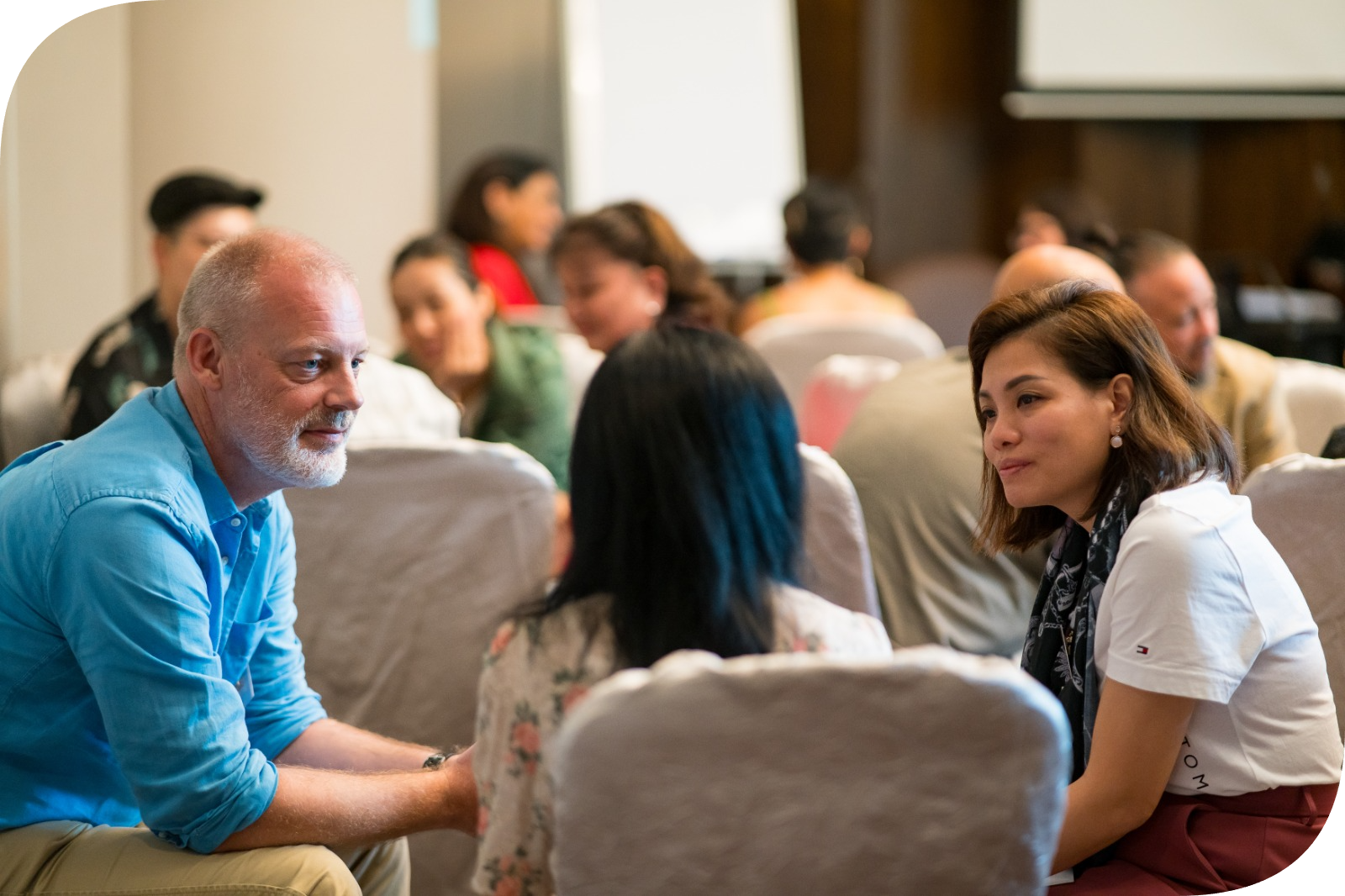
At the center of it is the idea of the observer. Your observer is simply the particular way you see and make sense of things, shaped by your moods, your past, and the language you use. You never meet a situation directly; you meet it through your observer. That is why two capable people can face the exact same situation and see completely different options. They are not looking at different facts. They are different observers.
Most coaching treats your observer as fixed and just hands you better techniques. Ontological coaching treats the observer itself as something that can change. Shift the way you see, and new actions follow without forcing them. This works because who we are is mostly learned, and anything learned can be learned differently. That is why your moods, posture, and language are not just side effects of who you are. They are exactly what the coaching works on.

How does Ontological Coaching Work?
Most coaching focuses on what you should do differently. Ontological coaching goes a step under that, to who you would need to be for the different result to come naturally. That is why its changes tend to last. A new habit added on top of the same person usually wears off; when the person changes, the new behavior is not an effort they keep up, it is simply how they are.
It is also a lighter way to work. Instead of constantly policing yourself, you spend more time understanding why you see things the way you do. This matters most for coaches and leaders, because you can only lead or coach others from who you are, so getting better at your work and growing as a person turn out to be the same thing. To see how ontological coaching does this, it helps to look at the three levels coaching can work at, each one deeper than the last.
‘How’ → Result
Across coaching in general, the most common level works on the how. It offers techniques, tools, and tactics: a better framework for the difficult conversation, a new system for managing time, a script for the negotiation. It is useful, and sometimes enough. But when the underlying way of being is untouched, the technique tends to fade. The person reverts to their default the moment attention drops, because nothing about who they are has actually changed.
‘Why’ → ‘How’ → Result
A deeper level adds the why. Here the coaching connects the action to motivation, values, and stakes, on the assumption that clarity of purpose will drive the new behavior. This helps more people, for longer. Yet many remain stuck even with complete clarity about why a change matters. They can articulate exactly why they should delegate, or rest, or speak up, and still not do it, because the person being asked to change is the same observer who created the pattern in the first place.
‘Who’ → ‘Why’ → ‘How’ → Result
The deepest level begins with the who. It works on identity and the narratives a person lives inside, recognizing that your sense of who you are quietly shapes your why, which shapes your how, which produces your results. When the who shifts, the levels below it reorganize on their own, and options that were genuinely invisible before come into view. The question at this level is simple but searching: if you wanted the world to respond to you differently, who would you need to be? Ontological coaching is built to help people answer that question and live the answer.

Ontological Coaching Benefits
The benefits of ontological coaching come from working at the level of being rather than behavior. Because the changes take hold in how a person observes and relates, the benefits tend to spread across work and life at once, instead of staying boxed into a single goal.
Improved Communication and Relationships
Ontological coaching treats communication as the place where way of being becomes visible. By learning to notice the dynamics of a conversation, the requests that were never clearly made, the promises left vague, the assessments treated as facts, people start to communicate with far more precision and care. Relationships improve not because someone memorized communication tips, but because they have become a different kind of listener and speaker.

Enhanced Adaptability and Flexibility
When you understand that your reactions flow from an interpretation rather than from reality itself, you gain room to maneuver. A setback that once felt like a wall becomes one reading of events among several. This is the heart of adaptability: not forcing positivity, but holding your interpretations lightly enough to choose a more useful one. In volatile, uncertain conditions, that flexibility becomes one of the most valuable capacities a leader can develop.
Heightened Critical Awareness
Most of us look at the world and rarely notice that we are looking through something. Ontological coaching develops the ability to observe your own observing: to catch the assumption, the mood, or the story that is shaping what you see before you act on it. This shift from looking at things to noticing how you are looking is the prerequisite for every other change, because you cannot transform a lens you cannot see.
Deeper Self-Awareness
Self-awareness in ontological coaching is not just psychological insight. It includes the emotional and bodily dimensions of who you are: the moods you live in without noticing, the posture you hold when you feel under threat, the patterns that show up across very different situations. Bringing these into awareness is what lets a person separate who they are from the temporary thoughts, feelings, and circumstances they had mistaken for permanent truth.
Greater Lightness and Curiosity
There is a particular quality to ontological work that other approaches rarely produce: a sense of lightness. Because the coach holds a non-judgmental stance, examining your assumptions stops feeling like exposure and starts feeling like discovery. That psychological safety frees people to look honestly at things they had been avoiding, and to approach their own patterns with curiosity rather than shame. Real change becomes easier precisely because it no longer feels so heavy.
Who Is Ontological Coaching For?
Ontological coaching benefits anyone whose growth keeps stalling at the level of behavior, but five groups gain the most from it.
Coaches and Consultants
For practicing coaches and consultants, ontological coaching is both a powerful addition to their toolkit and a transformation of how they work. It deepens their capacity to listen across language, emotion, and body, and it grounds their practice in a coherent body of theory instead of a loose kit of techniques. Many coaches describe it as the training that changed how they coach and, in time, how they live.
Leaders and Executives
Leaders gain the most when they realize a simple truth: you can only do leadership from your way of being. Decisions made under pressure, the tone you set in a room, the trust you do or do not generate all flow from who you are being, not from a leadership model you studied. Ontological coaching helps leaders develop presence, sounder judgment under stress, and the ability to have the conversations that move an organization forward. It pairs naturally with executive coaching, deepening it from skill-building into a real change in how a leader shows up.
The business case is straightforward. The most costly failures in organizations are rarely technical; they are relational, like a decision delayed because no one would name the real concern, or talent lost because a manager avoided an honest conversation. Ontological coaching builds exactly the capacities that prevent these, so leaders and teams who develop them decide more cleanly, coordinate better, and keep their people. The return shows up across how the whole system performs under pressure, not in any single metric.
Personal Development Enthusiasts
For those committed to their own growth, ontological coaching offers something rarer than another framework: a way to make change that lasts. People drawn to self-development often accumulate insight without transformation. By working at the level of being, this approach turns insight into a genuinely different way of moving through life.
Organizations
Organizations are, at bottom, networks of conversations, and ontological coaching works directly on the quality of those conversations. It helps teams surface the discussions they have been avoiding, the ones about trust, accountability, and commitment, and rebuild how they coordinate. Because the work reshapes the shared way of being of a team, not only the skills of its individuals, the changes hold across the system and survive the departure of any one person. This is the same terrain that team coaching works in, and an ontological approach gives it real depth.
Professionals in Cross-Cultural Environments
In cross-cultural settings, the gap between what is said and what is heard widens, and unexamined assumptions cause most of the friction. Ontological coaching equips professionals to notice their own interpretive filters and to listen for the concerns behind another person’s words. That capacity to suspend judgment and read meaning across difference is exactly what global and multicultural work demands.
Ontological Coaching Models and Frameworks
Ontological coaching draws on several models that give coaches a structured way to work with something as fluid as a way of being. Think of them as lenses, each offering a different angle on the same core idea: that who the coach and the client are being is the real instrument of change.
“Being Coach” Model
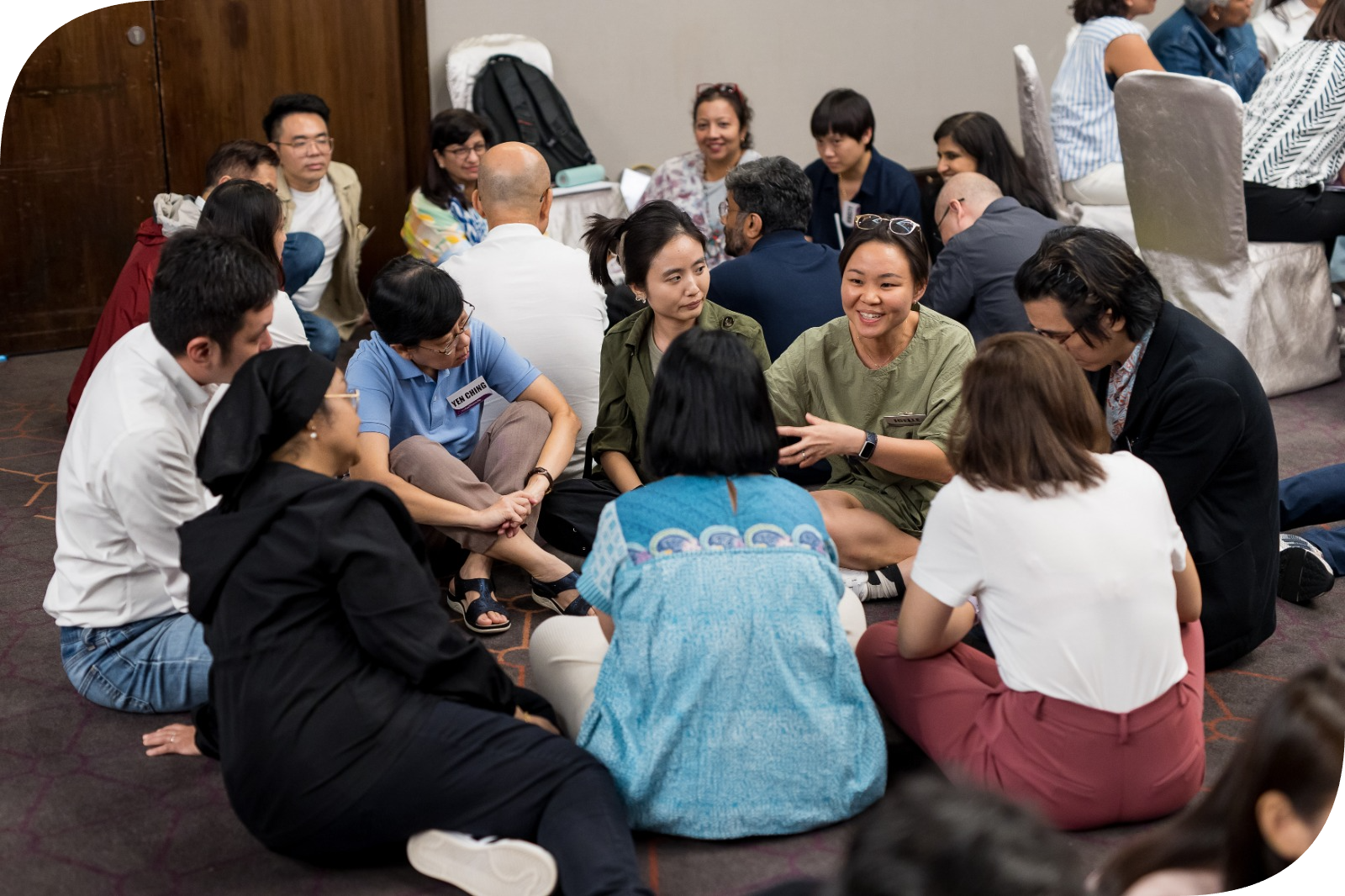
The “Being Coach” model places the coach’s own way of being at the center of the work. Its premise is that techniques matter far less than the quality of presence a coach brings, because a client can only go as deep as the space the coach is able to hold. A grounded, curious, non-judgmental coach creates the conditions for a client to see past their temporary limitations and recognize capacities they had lost sight of. In this model, the coach’s first responsibility is to manage their own way of being before attending to anyone else’s.
OAR
OAR (Observer, Action, Result) maps why surface-level change so often fails. Conventional problem-solving loops between Action and Result: when the result is wrong, change the action. Ontological coaching goes upstream to the Observer, because a person’s actions are always consistent with how they are observing the situation. Transform the observer and a different, more effective set of actions follows naturally, often without the strain that comes from forcing new behavior.
BEL
BEL (Body, Emotion, Language) names the three dimensions a coach works with simultaneously to shift a way of being. Each dimension is a way in, and a change in one tends to ripple into the others: a shift in posture can change how you feel, and new language can ease the body. Because these three are so central to the whole approach, the next section explores them in their own right.
Key Components of Ontological Coaching
If the three domains are the materials of a way of being, the following components are the working concepts an ontological coach uses to bring about change.
Way of Being
Way of being is the central concept of the entire approach: the integrated whole formed by your language, emotions, and body, which together determine how reality shows up for you and how you respond. It is not your personality in the fixed sense, and it is not a mood of the moment. It sits underneath both, and it is what makes one person meet a challenge as a threat while another meets the same challenge as an opportunity. Because a way of being is learned and held in concrete domains, it can be observed, worked with, and changed, which is precisely what makes coaching at this level possible.
The Power of the Observer
The observer is the perspective from which a person perceives and interprets everything. We never encounter reality directly; we encounter it through the kind of observer we are, shaped by our concerns, history, moods, and language. This is why two capable people can look at the identical set of facts and genuinely see different problems and different options. The power of the observer is the recognition that perception is not neutral, and the promise of ontological coaching is that the observer can expand. Becoming a richer observer, one with finer distinctions, is what turns a situation that felt closed into one that is full of possibility.
Distinctions
A distinction is the act of pulling apart things we have unconsciously fused together. Where we once saw a single, solid reaction, we learn to separate the event from our interpretation of it, or fear from the action we take while afraid. Each new distinction adds a degree of freedom, turning one undivided experience into several elements we can work with. Naming a distinction is often what first makes a new choice visible, and with it a possibility that was there all along but could not be seen.
Narratives
Narratives are the stories we tell about ourselves, others, and how the world works, and the trouble is that we tend to live them as if they were simply true. “I am not a natural leader,” “people cannot be trusted,” “I am bad at this” are not neutral descriptions; they are interpretations that quietly organize what we attempt and what we avoid. Often what blocks a person is not a lack of resources but the narrative explaining why those resources are out of reach. Ontological coaching helps people identify the stories they are living inside, loosen their grip, and author new ones that open rather than close their range of action.
Deep Listening Techniques
Deep listening is the core skill that makes everything else work. An ontological coach listens for far more than the content of what is said. They listen for the speech acts being performed, the mood underneath the words, and what the body is expressing, the lyrics and the music at once. This kind of listening can catch the assessment a person has mistaken for a fact, or the request hidden inside a complaint. Done well, deep listening is itself an intervention: being heard at this depth often lets a person hear themselves clearly for the first time, and that alone can begin to shift their way of being.

How Is Ontological Coaching Different from Other Approaches?
| Dimension | Team coaching | Individual coaching |
|---|---|---|
| Who is coached | The whole team as a single client | One person at a time |
| Focus | How the team works together: trust, dynamics, and shared goals | One person’s growth, skills, and goals |
| What changes | The relationships and the system between people | The individual’s mindset and behavior |
| Best suited to | Teams that have to deliver together | Developing one person, often a leader |
| Typical format | A series of group sessions over months, sometimes with one-to-ones | Regular one-to-one sessions |
What Happens in Ontological Coaching?
Ontological coaching looks less like advice and more like guided noticing. A typical engagement runs over a series of sessions rather than a single meeting, because shifting a way of being takes time and practice.
In the sessions, the coach works through dialogue, questions, and careful observation, listening not just to what you say but to the mood and posture underneath it. They might point out an assessment you have been treating as fact, notice where your body tightens, or name a pattern you keep returning to. From there you experiment, trying on new language and practices, sometimes simple bodily shifts, and noticing what changes.
Much of the real work happens between sessions, in the small practices you carry into daily life. The aim is not to depend on the coach but to become a sharper observer of yourself, able to catch and shift your own patterns long after the coaching ends.
Becoming an Ontological Coach: Training and Certification
Becoming an ontological coach means working on your own way of being, not just picking up techniques. You cannot take someone somewhere you have not been, so the training is as much personal change as professional qualification, and the best programs are hands-on, not theory-heavy.
When choosing a program, three things matter most:
- Lineage: ontological coaching has a real intellectual tradition. Strong programs teach it directly; weaker ones water it down.
- Accreditation: ICF recognition means the training meets a global standard and counts toward a credential.
- Faculty: the coach’s way of being is the instrument, so who you learn from shapes who you become.

One practical note for coaches in Asia: most ontological training runs on US or European time, which makes steady cohort learning hard. A program on regional time removes that, and it is worth comparing ontological training against a broader coaching certification before you commit.
Newfield Ontological Programs
Ontological coaching is one of the most effective methodologies for transformation available today—both personal transformation and organizational transformation. Ontological coaching is a practice that facilitates the emergence of new possibilities in the personal and/or professional life of an individual (or group) by making him aware of his participation in the construction and co-creation of the reality he perceives. More simply put, ontological coaching addresses the concern for more effective action while also addressing the concerns of the human soul that are mostly left out of our learning practices today.
This approach to coaching transforms your worldview and capacity for action while teaching you to coach others for meaningful and sustainable change. The Coach Partnership’s Ontological Coach Training Programs are accredited by the International Coach Federation (ICF). Consisting of two modules, spread across three, in-person conferences and are led by an international team of experienced, skilled facilitators and certified coaches. The modules are called “The Foundations in Ontological Learning Course” and “The Art and Practice of Ontological Mastery” (TAPOM) and are accredited by the International Coach Federation (ICF) Level 2. Taken together, these two modules form The Newfield Coach Certification Program (Foundations plus TAPOM) that is delivered over a nine month period. Each participant is supported throughout the program by a senior Newfield Certified Coach.
The conferences produce a rich learning context that helps you uncover ways of thinking, feeling and moving. Conference activities include:
- Introduction and practice of the Newfield distinctions and models
- Individual and group coaching sessions.
- Small and large group interactions.
- Experiential learning activities in the 3 domains of language, emotions, and body (somatics).
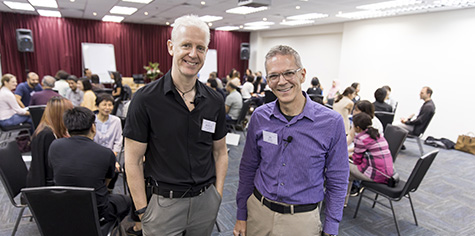
Module 1: The Foundations Program
Personal Leadership for Breakthrough Results
Our core, personal leadership program, Foundations, gives you new insights and practices to be more effective in leading—in all aspects of your life. Through Foundations, you experience a new kind of learning that supports you in generating a more meaning-filled, satisfying, and powerful life, consistent with what matters to you most.
In Foundations you will:
- Generate breakthrough results in your professional and personal life.
- Learn how to navigate complex issues with greater ease and less fear.
- Learn distinctions, models and practices that allow you to generate new results.
- Show up with greater presence and wisdom for greater impact.
- Learn how to live a life you love – aligned with what you care about.
- Experience the body as a territory for learning and learn practices that shift limiting patterns of movement.
- Build new foundations of conscious learning that boost your capacity for professional and personal excellence in leading others.
2026 / 2027 schedules
- Conference 1: 29 October – 1 November 2026 (In-person conference, in Singapore)
- Conference 2: 1 – 4 April 2027 (Virtual, via zoom)
- Conference 3: 26 – 29 August 2027 (In-person conference, in Singapore)
Complete the enquiry form to know more about the program.
Module 2: The Art and Practice of Ontological Mastery
Coaching for Sustained Behavior Change
As you approach the completion of Foundations in Ontological Learning, or if you have completed Foundations in the past, you are eligible to continue to our second module – The Art and Practice of Ontological Mastery (TAPOM). This is a program that builds on Foundations and gives you the skills to coach others using the Ontological model of coaching.
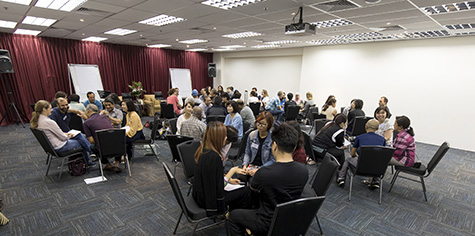
The Foundations course introduced you to the distinctions of Ontological Learning but, in the most part, the Observer you studied was yourself. In TAPOM, we start to learn how to support others in the same way and the mechanism we use is coaching. Many of our TAPOM participants are managers, leaders and professionals who want to support those around them as they add coaching to their repertoire. Mastery only occurs in the application of learning. We truly embody our learning as we use it in the service of others.
The standards of the program are in-line with the International Coaching Federation’s (ICF) highest standards for a coaching school (Level 2). Once you complete this module, you are eligible for Newfield Coach Certification which opens the fast track door to ICF accreditation.
The Art and Practice of Ontological Mastery (TAPOM)
TAPOM is the program that follows the above mentioned Foundations Program. TAPOM begins immediately after the closing of Foundations in Conference 2. It is an online conference, via Zoom from 1 – 4 April 2027. The program ends with Conference 3, an in-person conference, in Singapore from 26 – 29 August 2027.
Full Coach Certification Program
To complete the full Newfield Ontological Coaching Certification program both the Foundations & TAPOM modules must be completed.
The full program dates are:
- Conference 1: 29 October – 1 November 2026 (In-person conference, in Singapore)
- Conference 2: 1 – 4 April 2027 (Virtual, via zoom)
- Conference 3: 26 – 29 August 2027 (In-person conference, in Singapore)
Complete the enquiry form to know more about the program.

Re-immersion Program
Re-Immerse Yourself in Newfield’s Ontological Learning
We offer our alumni an opportunity to re-immerse in our programs. Many Newfield Graduates have expressed how much more they learn the second time around. You may pick up on things you didn’t realize from your first experience or leave more deeply grounded in your field of practice. You can go deeper with the Newfield distinctions in Conference 1 or 2 and / or go deeper in their practice of coaching in Conference 3. All of the conferences have developed over our years of delivery.
Graduates who have taken our programs have told us that they:
- Gained new insights
- Deepened and refined their coaching skills
- Reconnected with a nourishing, supportive and loving community
For ICF certified coaches who need to pick up Continuing Coach Education Units (CCEUs), re-immersing in the conferences is an ideal way to do this.
Complete the enquiry form to know more about the program.
Historical Origins of Ontological Coaching
Ontological coaching did not begin in the coaching world. It brought together three older fields that had each, on their own, reached the same insight: we never meet reality directly, only through the kind of observer we are.
Philosophy gave it the focus on being itself, on how we exist before we act, above all through Martin Heidegger. The biology of cognition, in Humberto Maturana and Francisco Varela’s work, showed that perception does not simply record the world but actively brings it forth. And the philosophy of language, through J. L. Austin and John Searle, established that words do not just describe reality but act on it, through the requests, promises, and declarations that open new possibilities.
Fernando Flores wove these threads together, first with Terry Winograd on language and action, then in his work on commitment in organizations. Rafael Echeverria and Julio Olalla built on that to shape the approach into a formal method: the Newfield tradition that The Coach Partnership’s training comes from.
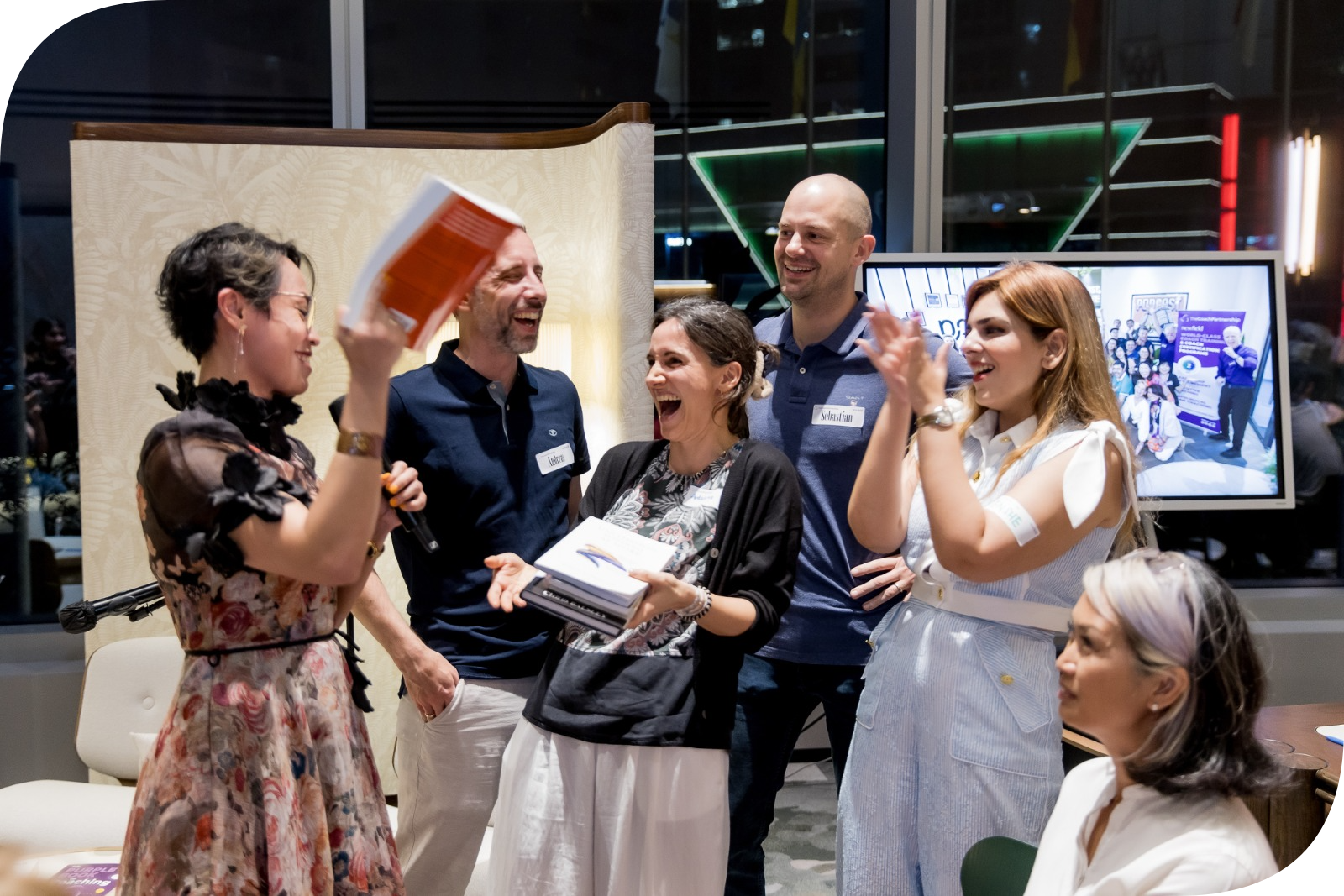
Why Choose The Coach Partnership for Ontological Coaching in Singapore?
- You learn from a former CEO of Newfield Network: Director of Training Terrie Lupberger, MCC, is a former CEO of Newfield Network USA, so you study the methodology a step from its source rather than a diluted second-hand version.
- Your trainers wrote the field’s standard texts: The faculty includes Chalmers Brothers, author of Language and the Pursuit of Happiness, and Charles Feltman, author of The Thin Book of Trust. You learn the language and trust distinctions from the people who defined them, not from a trainer reciting someone else’s material.
- A faculty rich in Master Certified Coaches: Most programs are staffed largely by PCC-level trainers. TCP fields multiple Master Certified Coaches (MCC), the ICF’s highest and rarest credential, among them Carol Courcy, Croft Edwards, and Tini Fadzillah. You learn from coaches at the very top of the profession.
- The somatic domain taught by specialists: TCP runs dedicated somatic trainers, Chris Balsley, Beatriz Garcia, and Sari Marsden, so the body, a full third of ontological work, is taught with genuine rigor, where most programs touch on it only in passing.
- Newfield, delivered in Asia on Singapore time: TCP brought the Newfield program to Asia and runs it on regional schedules, with in-person conferences in Singapore. You gain the embodied, face-to-face dimension of the work without rebuilding your life around a North American or European calendar.
Your Certified Ontological Coaching Trainers
The program is led by an international faculty of ICF-credentialed coaches, several of them Master Certified Coaches (MCC), trained in the Newfield ontological tradition. The core training team includes:
- Terrie Lupberger, MCC, Director of Training: Former CEO of Newfield Network USA, one of the original ontological coaching schools, so you learn the method close to its source.
- Marcus Marsden, PCC, Managing Partner: Lead trainer on the Newfield ontological coach training program and an ICF-certified executive coach.
- Tini Fadzillah, MCC, Founding Partner: A Newfield Certified Ontological Coach and one of the most senior ontological coaches in the region.
- Chalmers Brothers, PCC: Author of Language and the Pursuit of Happiness, a core text on the language work at the heart of ontological coaching and used in Newfield programs worldwide.
- Carol C. Courcy, MCC: Trained in ontological coaching since 1990 and a former Vice President of Newfield Network USA, with more than 6,000 hours of coaching.
- Chris Balsley, Somatic Trainer: Lead somatic trainer for Newfield Asia, teaching the body domain that sets ontological coaching apart.
- Beatriz Garcia, PCC, Somatic Trainer: A Newfield Certified Ontological Coach and somatic trainer on the Newfield program.
- Sari Marsden, PCC, Somatic Trainer: A somatic trainer who develops the body dimension of ontological practice.

Your Certified Team Coaching Trainers
The program is led by an international faculty of ICF-credentialed coaches, several of them Master Certified Coaches (MCC), trained in the Newfield ontological tradition. The core training team includes:

Terrie Lupberger
MCC, Director of Training
Former CEO of Newfield Network USA, one of the original ontological coaching schools, so you learn the method close to its source.
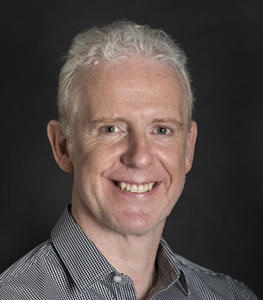
Marcus Marsden
PCC, Managing Partner
Lead trainer on the Newfield ontological coach training program and an ICF-certified executive coach.

Tini Fadzillah
MCC, Founding Partner
A Newfield Certified Ontological Coach and one of the most senior ontological coaches in the region.

Chalmers Brothers
PCC
Author of Language and the Pursuit of Happiness, a core text on the language work at the heart of ontological coaching and used in Newfield programs worldwide.

Carol C. Courcy
MCC
Trained in ontological coaching since 1990 and a former Vice President of Newfield Network USA, with more than 6,000 hours of coaching.

Chris Balsley
Somatic Trainer
Lead somatic trainer for Newfield Asia, teaching the body domain that sets ontological coaching apart.

Beatriz Garcia
PCC, Somatic Trainer
A Newfield Certified Ontological Coach and somatic trainer on the Newfield program.

Sari Marsden
PCC, Somatic Trainer
A somatic trainer who develops the body dimension of ontological practice.
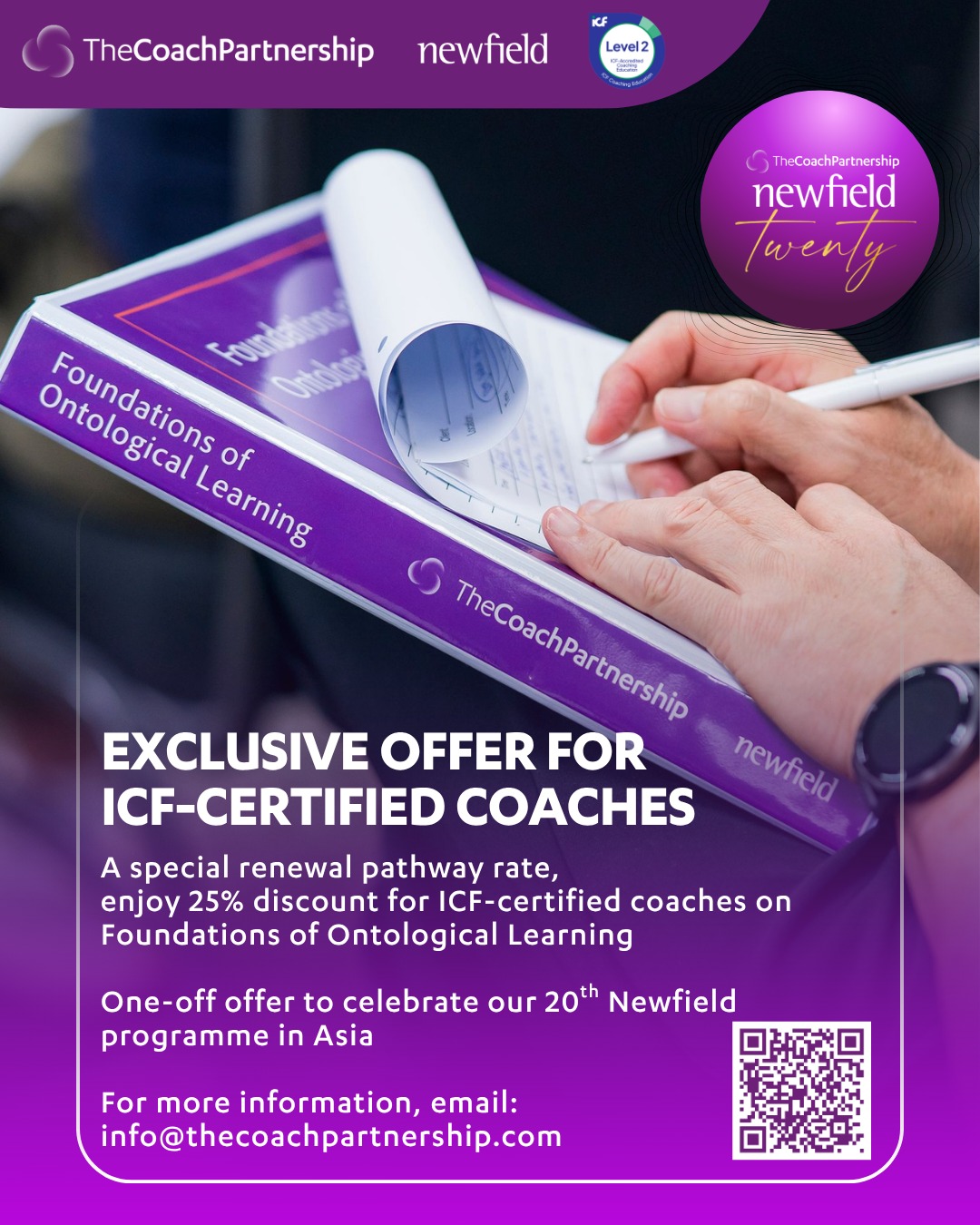
Exclusive Offer for
ICF-Certified Coaches
We are marking our 20th Newfield programme in Asia this year with a unique offer – a special renewal pathway rate, only for ICF-certified coaches:
25% discount on our Foundations of Ontological Learning programme
This is an invitation for certified coaches to go deeper and to use the ontological coaching approach to explore a fundamental question – “Who am I being as a coach?”
The offer includes:
- 60 hours of recognised coach training hours to support your ICF renewal
- A direct experience of the ontological coaching approach via 6 hours of coaching with one of our certified program coaches.
For more information, contact: info@thecoachpartnership.com
Program Details
The Newfield Ontological Coaching Certification split into two modules which spans over 4.5 months each, a total of 9 months for the full program.
Upcoming Program Schedule
Conference 1:
29 October – 1 November 2026
(In-person conference, in Singapore)
Conference 2:
1 – 4 April 2027
(Virtual, via zoom)
Conference 3:
26 – 29 August 2027
(In-person conference, in Singapore)
In between conferences, the distance learning includes discovery guides, tele-classes, study groups, learning groups, 1-1 coaching and 1-1 mentor coaching.
If you would like to receive more information on our coaching program brochure or speak with someone from our team, complete the form below:
Ontological Coaching Testimonials
It’s always been clear to me that certain people, people who exercise regularly and who eat healthy, people who sleep well and who don’t smoke or drink to excess, create different outcomes in life. Becoming certified as a health coach has cemented this understanding of health in a new way for me; a way that has allowed me to be even more outrageous with my clients as they take control of their health and aging and inspire those around them to do the same.

Chris Balsley, PCC
I loved The Health Coaching Program by The Coach Partnership! The tools I learnt equipped me to work with people at a deep and sustainable level. I love working with people to reveal the “why” of the goals they have on health, which often reveals the depth of what and who they truly care about!

Alice Chia, PCC
The Health Coaching Program with The Coach Partnership is a well-curated learning platform for appreciating essential well-being. I am grateful for the insights and resources shared by well-seasoned mentor coaches alongside an accomplished collective of health professionals, fitness specialists and wellness experts. Being attuned to health and wellness, not only nourishes and expands my coaching conversations with clients, but also sustains my own journey of well-being.

Derrick Tan, ACC
I am honored to be certified as a Health Coach by The Coach Partnership. This program served as a platform for me to practice integrating ontological, executive and health coaching in the realm of Healing. The practice reminded me how important listening intently into the depth of a client’s conversation is to Self-Care and Self Recovery. Much Gratitude to Mark Hemstedt and Dr. Kat for designing and giving me the opportunity to participate in this world class program.

Lina Sutton
The Health Coaching Program by The Coach Partnership journey helped me discover that everyone has different health and wellness goals and commitment to change. Health Coaching in combination with Ontological Coaching is an excellent space to serve the world. I am grateful for this experience.

Stefen Choo
The Health Coaching Program by The Coach Partnership was a wonderful program that expanded and deepened the way in which i support my clients through change. The course reinforced to me how vital it is to manage nutrition, physical fitness, sleep and stress. I am so pleased to be able to support my clients in making changes that improve the quality of their lives.

Katie Gray
As a Coach, Wellness Coaching had never been on my list of things to pursue. I was drawn to this course due to the caliber of the instructors and my fellow students; I hoped to rub shoulders with incredible and wise coaches. I now understand that health and wellness is embedded in nearly every issue brought into the coaching space. Wellness is integral to helping others, and | now have the confidence to explore this realm with my clients, friends and family!

Katie Lay, ACC, NCC
I am so thrilled to receive this certification. It is indeed, a humbling journey and honest conversation that I had ever experienced, coaching the clients. As their leader and coach, the journey makes me reflect how I have led them in the past and how I can be better moving forward.

Noor Afiza Mohd Yusof, ACC
Grateful for another eye opening year into the world of Health and Wellness. This brings a positive angle to 2020.
My thoughts are with Mark Hemstedt that brought me into coaching more than 10 years ago and I see his hand behind
some of the teachings. This learning has proven extremely efficient for my clients and perhaps even more for myself.
I am now a healthier human being thanks to The Coach Partnership program.

Pascal Coudeville
Thank you The Coach Partnership, for curating such an engaging and diverse program. I loved the broad range of medical topics presented by top notch experts, the Health Lens and the focus on building momentum. What a gift to coach people on their health and wellness journeys. I walk away with a renewed appreciation for the wisdom of listening to both our bodies and our hearts.

Ruth Gertler
Participating in the Health and Wellness Coaching programme has been a great experience. Bringing to bear an often overlooked domain in the Executive Coaching world, the insights, mentoring and collaboration with other coaches has been transformative for me and my clients. With new distinctions, I look forward to supporting others in helping them achieve their health and wellness goals.

Alex Talbot, PCC
The Health Coaching Program is amazing in its ability to go both broad and deep into different aspects of health–
physical, emotional and mental–as well as in providing Practical and effective tools to help clients create sustainable behaviour and habit changes. It’s made a positive impact not only to my role as a Coach, but also to my personal health and of my family and friends as well. Highly recommended for all Coaches!

Albert Atinon, ACC
Well-being is at the forefront of everyone’s concerns now. Being an executive coach, I sensed the presenting need to certify as a health & well-being coach as well. With the best of faculty & mentors to support, and coach colleagues on board, the journey has changed
me- as a person and as a coach! Truly grateful.

Harmeet Kaur Anand, PCC
“It is health that is real wealth and not pieces of gold and silver”
-Mahatma Gandhi
I now appreciate a whole new perspective on my own and other peoples health, which is invaluable in effective coaching. Thanks to the The Coach Partnership for such relevant, well designed and delivered program. I love working and coaching with clients on their happiness and health is the most important area!

Gordon Sutton
The journey to be a health and well-being coach is both ‘learningful’ (= meaningful learning) and enriching. As a coach, it enables me to value-add to the well-being of others.

Connie Chai
Begin Your Ontological Coaching Journey
Learning to observe yourself differently changes more than your results. It changes the person who shows up to your work, your relationships, and your own life, and that change keeps unfolding long after the program ends. This is the real promise of ontological coaching: not a sharper set of techniques, but a wider way of being. If something here spoke to you, we would love to continue the conversation. Reach out to The Coach Partnership, and let us explore together what becoming a new kind of observer could open up for you.

Ontological Coaching FAQs
Can I do ontological work on my own, or does it require a coach?
You can begin on your own, but the deepest work is relational by design. Simple practices help: noticing the moods you live in, catching assessments you have been treating as facts, paying attention to your posture under stress. The limit is that your way of being is largely invisible to you, since it is the very lens you are looking through. A skilled coach sees the blind spots you cannot and can perturb the patterns you would otherwise protect. And if your aim is to coach others, formal training is essential.
What is the difference between ontological coaching and life coaching?
Life coaching tends to focus on goals and the actions that reach them: what you want and the steps to get there. Ontological coaching works one level deeper, on the observer setting those goals in the first place. Rather than only planning new actions, it shifts how you see and respond, so different actions follow more naturally. Life coaching asks what you want to do; ontological coaching also asks who you would need to be to do it without forcing yourself.
How long does ontological coaching take?
There is no fixed length, because the work is developmental rather than a quick fix. Individual coaching often runs over several months, long enough for new ways of being to take hold rather than fade after a session or two. Training to become a coach is longer: the Newfield certification runs across two modules over roughly nine months. As a rule, the deeper the change you are after, the more time and practice it asks for.
Who is qualified to practice ontological coaching?
Anyone can apply ontological ideas in their own life, but practicing as an ontological coach calls for formal training. Credible practitioners have completed an accredited ontological coaching program and, in most cases, hold or are working toward an ICF credential. Because the coach’s own way of being is the instrument, that training is as much personal development as technical instruction, which is why a recognized program and lineage matter when choosing who to learn from or work with.
How much does ontological coaching cost?
It depends on whether you are being coached or training to become a coach. Individual coaching is usually priced per session or per engagement, while certification programs are a larger investment that reflects months of training, faculty time, and accreditation. For current tuition and payment options for The Coach Partnership’s certification, see the program details above or contact the team directly
Will I be ICF certified after completing the program?
The Coach Partnership’s ontological coach training is accredited by the International Coaching Federation at Level 2, which means the training hours count toward an ICF credential such as the ACC or PCC. Completing the program is a major step toward certification, though the ICF credential itself involves additional requirements set by the ICF, including coaching experience hours and an assessment.
Are there any prerequisites to enroll in ontological coaching?
The Foundations Program is open to anyone ready to engage seriously with their own growth, with no formal coaching background required. The advanced module builds on Foundations, so it assumes you have completed that first stage.
How do I enroll in ontological coaching?
Enrollment starts with a conversation. Contact The Coach Partnership on (+65) 6338 2280 or at info@thecoachpartnership.com to discuss your goals, confirm the upcoming cohort dates, and complete registration. Given the in-person conferences in Singapore, it is worth securing your place early.
Recommended Books, Articles, and Podcasts on Ontological Coaching
A short, curated reading and listening list, drawn first from The Coach Partnership’s own faculty and then from the foundational texts of the tradition.
Books
- The Purple Book of Coaching by The Coach Partnership: A team anthology of practical wisdom on the ontological approach to a meaningful life, written by TCP’s own trainers and coaches.
- Language and the Pursuit of Happiness by Chalmers Brothers: The accessible entry point to generative language, by a TCP trainer whose work is used at Georgetown, George Mason, and Harley-Davidson.
- The Thin Book of Trust by Charles Feltman: A concise, widely used guide to building trust at work, framed around four assessable domains, by a TCP program coach.
- Start With Who by Marcus Marsden: On the hidden power of identity in leadership and performance, by TCP’s Managing Partner.
- Ontology of Language by Rafael Echeverria: A cornerstone text of the tradition, laying out language as action rather than mere description.
- The Tree of Knowledge by Humberto Maturana and Francisco Varela: The biology of cognition that grounds the ontological idea of the observer.
Articles
- “A Coach’s Guide to Emotional Intelligence” (contributing author, Terrie Lupberger): TCP’s Director of Training contributes to this volume alongside Julio Olalla, connecting emotional intelligence to ontological practice.
- Terrie Lupberger’s published columns: Her columns on coaching, leadership, and personal change are a readable window into how an MCC thinks about transformation.
- The Coach Partnership blog: TCP’s own articles on ontological coaching, leadership, and team development.
Podcasts
- TINITALK, hosted by Tini Fadzillah, MCC: The Coach Partnership’s official podcast, with episodes featuring the faculty, including “Cultivating Trust with Charles Feltman,” “The Liquid Accordion with Croft Edwards,” and “Somatics in Leadership with Chris Balsley.”
- Terrie Lupberger on the Arete Coach podcast: A guest conversation on her path into coaching and on mastering the ICF coaching competencies.
References
Austin, J. L. (1962). How to do things with words. Oxford University Press.
Echeverria, R. (2006). Ontology of language. Newfield Network.
Heidegger, M. (1962). Being and time (J. Macquarrie & E. Robinson, Trans.). Harper & Row.
Maturana, H. R., & Varela, F. J. (1987). The tree of knowledge: The biological roots of human understanding. Shambhala.
Searle, J. R. (1969). Speech acts: An essay in the philosophy of language. Cambridge University Press.
Sieler, A. (2023). Ontological coaching. In E. Cox, T. Bachkirova, & D. Clutterbuck (Eds.), The complete handbook of coaching (4th ed.). SAGE.
Winograd, T., & Flores, F. (1986). Understanding computers and cognition: A new foundation for design. Ablex.